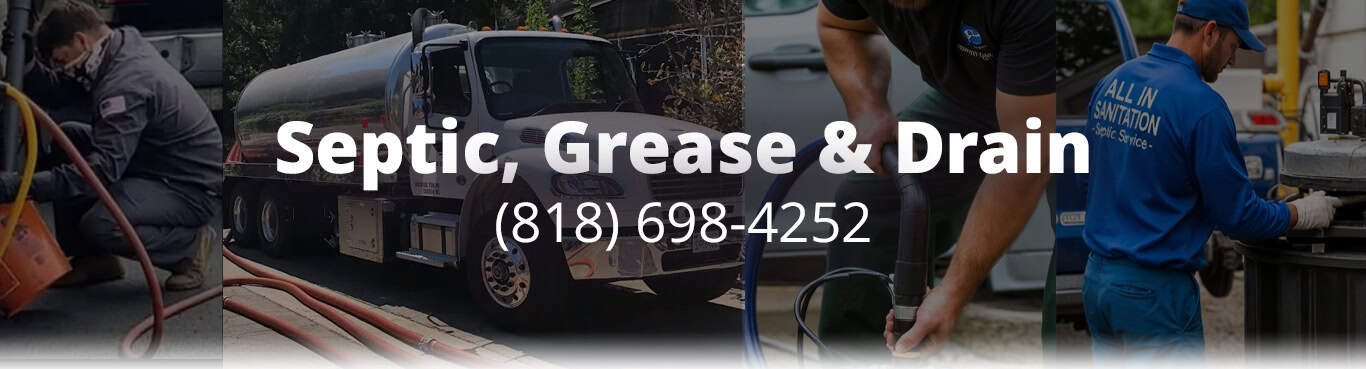
Septic Pumping, Cleaning and Inspection West Hollywood
Septic Pumping, Cleaning & Inspection West Hollywood, CA | All In Sanitation
Professional Septic Services for West Hollywood, Beverly Hills Adjacent, Melrose District & Central LA | Licensed, Bonded & LA County Compliance Guaranteed
All In Sanitation delivers expert septic tank pumping, cleaning, inspections, and comprehensive maintenance throughout West Hollywood and the heart of Los Angeles. From historic Spanish Colonial homes in the Norma Triangle to modern condos along the Sunset Strip, from entertainment venues near the Whisky a Go Go to fine dining establishments on Melrose Avenue, our certified technicians provide the meticulous care your septic system demands.
West Hollywood’s unique urban density, aging infrastructure, and position within the highly regulated Los Angeles Basin create specific challenges for septic system performance. Our locally-based team understands how LA County’s seismic requirements, strict environmental codes, and high water table areas impact your system’s longevity. We don’t just pump tanks—we engineer solutions that protect your property value, ensure regulatory compliance with the Los Angeles County Department of Public Health, and prevent the catastrophic failures that can cost West Hollywood property owners $25,000–$60,000 in emergency repairs, environmental remediation, and municipal fines.
Whether you’re maintaining a legacy system in a 1920s Spanish Revival near Plummer Park, managing a commercial property along Santa Monica Boulevard, ensuring your Sunset Strip venue operates without interruption, or servicing a luxury estate in the Bird Streets, All In Sanitation combines technical excellence with genuine hyper-local expertise.
Contact All In Sanitation: West Hollywood’s Septic System Experts
- Phone: (818)698-4252
- Email: info@allinsanitation.
com - Office Hours: Monday–Saturday, 6:00 AM – 7:00 PM
- Emergency Service: 24/7 including all holidays
- Emergency Response Time : 90-minutes
- Same-Day Service
- Licensed FOG Hauler
Reliable Septic Maintenance Services | All In Sanitation
Why West Hollywood Property Owners Trust Our Expertise
Deep Local Knowledge: Our technicians service septic systems from West Hollywood to Beverly Hills, from Hollywood Hills to Fairfax District. We understand the specific challenges of hillside drainage in the Hollywood Hills West, the impact of earthquake retrofitting on older systems, and how West Hollywood’s high water table affects drain field performance. We’ve serviced properties near The Comedy Store, restored systems in WeHo Design District historic buildings, and performed emergency pumping for restaurants along Melrose Avenue and Robertson Boulevard.
LA County Compliance Specialists: California’s septic regulations are among the nation’s most stringent, and the Los Angeles County Department of Public Health and Los Angeles Regional Water Quality Control Board enforce specific requirements for system installation, maintenance, and documentation. Our compliance guarantee means we handle every permit, inspection report, and regulatory filing with precision. If our documentation fails to meet LA County standards, we pay your fines. This isn’t just a promise—it’s our professional commitment to protecting your investment in one of California’s most regulated municipalities.
24/7 Emergency Response: Septic emergencies don’t follow business hours—especially critical for West Hollywood’s hospitality and entertainment industries. Our LA-based fleet provides rapid response to backups, overflows, and system failures throughout West Hollywood, Beverly Hills 90210/90211, Hollywood Hills, and Fairfax District. Average response time: 30–45 minutes within West Hollywood city limits.
Septic Tank Pumping in West Hollywood
Comprehensive Sludge and Solids Removal for Central LA Properties
Septic tank pumping is the cornerstone of system longevity. In West Hollywood’s urban environment, where many properties operate on legacy systems originally installed decades ago, regular pumping prevents the accumulation of solids that destroy drain fields, contaminate groundwater, and trigger LA County Health Department violations.
Our Pumping Process:
-
Pre-Service Assessment: We locate your tank using electronic detection equipment (essential for West Hollywood properties where tanks are often buried under landscaping or hardscaping), assess access points, and document current conditions for LA County records.
-
Complete Evacuation: Our high-capacity vacuum trucks—sized appropriately for West Hollywood’s narrow streets and hillside access challenges—remove all wastewater, sludge, and scum layers. Unlike basic pumping services, we ensure complete tank evacuation—not just liquid removal.
-
Structural Inspection: While pumping, our technicians examine baffles, inlet/outlet tees, and tank walls for cracks, root intrusion, or deterioration common in West Hollywood’s aging infrastructure and seismically active environment.
-
Post-Service Documentation: You receive detailed service records, waste disposal manifests, and compliance documentation for your property file, Rent Stabilization Ordinance requirements, and potential real estate transactions.
West Hollywood-Specific Considerations:
-
High Water Table: Areas near Santa Monica Boulevard and the Melrose District experience higher groundwater levels, requiring specialized pumping protocols and potentially more frequent service intervals.
-
Hillside Drainage: Properties in the Bird Streets, Sunset Plaza, and Hollywood Hills West face unique gravitational and drainage challenges. We assess slope stability and drainage patterns affecting your system.
-
Seismic Impact: West Hollywood’s location near multiple fault lines means tanks and lines may shift or crack. Our inspections include seismic damage assessment.
-
Heritage Systems: Many WeHo properties built in the 1920s–1950s have original septic systems or early sewer connections. We specialize in maintaining these legacy systems while planning compliant upgrades.
-
Commercial Loading: Restaurants on Melrose, hotels near Sunset Strip, and entertainment venues experience heavy usage requiring specialized maintenance schedules.
Recommended Pumping Frequency for West Hollywood:
-
1–2 person households: Every 3–4 years
-
3–4 person households: Every 2–3 years
-
5+ person households: Every 1–2 years
-
Commercial properties (restaurants/hotels): Quarterly to semi-annual
-
Properties with garbage disposals: Reduce intervals by 30%
-
High water table areas: Increase frequency by 25%
Septic Tank Cleaning Services
Beyond Pumping: Deep Cleaning for Urban System Optimization
While pumping removes liquid and floating solids, professional cleaning eliminates the hardened sludge, grease accumulation, and biological mats that cling to tank walls and reduce capacity. In West Hollywood’s commercial-heavy environment, where restaurants and food service dominate Melrose Avenue and Robertson Boulevard, comprehensive cleaning is essential for maintaining system efficiency and LA County Environmental Health compliance.
Our Cleaning Protocol:
-
High-Pressure Washing: Industrial-grade equipment removes scale, grease buildup, and sludge from tank walls, baffles, and inlet/outlet structures. Critical for food service establishments.
-
Grease Removal: Specialized protocols for commercial kitchens to remove fats, oils, and grease (FOG) that solidify and cause blockages. We coordinate with LA County FOG program requirements.
-
Root Removal: Mature landscaping throughout West Hollywood, Beverly Hills adjacent, and Hollywood Hills sends roots seeking moisture into tanks and pipes. We remove root masses and recommend prevention strategies compliant with local tree protection ordinances.
-
Filter Cleaning: Effluent filters are cleaned or replaced to ensure proper wastewater flow to your drain field—essential in high-density areas.
Benefits for West Hollywood Properties:
✓ Restores tank to near-original capacity
✓ Prevents premature drain field saturation (critical in high water table areas)
✓ Reduces risk of backups during high-traffic periods (weekends on Sunset Strip)
✓ Extends system lifespan by 10–15 years in challenging urban conditions
✓ Maintains property value for luxury real estate transactions
✓ Ensures compliance with LA County Health Code for commercial properties
✓ Prevents premature drain field saturation (critical in high water table areas)
✓ Reduces risk of backups during high-traffic periods (weekends on Sunset Strip)
✓ Extends system lifespan by 10–15 years in challenging urban conditions
✓ Maintains property value for luxury real estate transactions
✓ Ensures compliance with LA County Health Code for commercial properties
Septic System Inspections
Certified Inspections for Real Estate, Compliance, and Peace of Mind
All In Sanitation provides comprehensive septic inspections that meet Los Angeles County Department of Public Health requirements and protect your significant West Hollywood investment. Our inspections go beyond visual checks—we provide forensic analysis of your system’s health in one of LA’s most valuable real estate markets.
Inspection Components:
1. Tank Evaluation
-
Sludge and scum layer measurements
-
Structural integrity assessment (cracks, corrosion, seismic damage)
-
Baffle and tee condition verification
-
Inlet/outlet pipe examination
-
Leak detection using dye testing
-
Hillside stability assessment for elevated properties
2. Drain Field Assessment
-
Soil percolation evaluation (critical in clay-heavy LA Basin soils)
-
Standing water or saturation detection
-
Vegetation analysis (unusually green grass may indicate failure)
-
Odor assessment
-
Distribution box inspection
-
Setback compliance verification (LA County requires specific distances from property lines and structures)
3. Mechanical Component Review
-
Pump functionality (for elevated drain fields common in Hollywood Hills)
-
Alarm system testing
-
Electrical connections
-
Timer and control panel operation
-
Backflow prevention device inspection
4. Regulatory Compliance Verification
-
Permit status with LA County Department of Public Health
-
Setback compliance (distance from wells, property lines, water bodies)
-
Capacity adequacy for current usage
-
CEQA (California Environmental Quality Act) documentation for commercial properties
5. Documentation & Reporting
-
Detailed written report with photographs
-
Schematic drawings of system layout
-
Recommended maintenance schedule
-
Compliance certification for LA County
-
Repair prioritization (immediate vs. future)
-
Real estate disclosure documentation accepted by all title companies
When West Hollywood Properties Need Inspections:
-
Real Estate Transactions: Required by most lenders for properties not connected to city sewer, including luxury homes in Bird Streets, Sunset Plaza, and Norma Triangle. Essential for $2M+ property sales.
-
Rent Stabilization Compliance: West Hollywood’s strict tenant protection laws require maintained systems for rental properties.
-
Commercial Licensing: Restaurants, hotels, and entertainment venues need current inspections for LA County Health Department permits.
-
System Malfunctions: Before purchasing a home with recurring backup issues (common in older WeHo inventory).
-
Renovation Planning: Required before adding bathrooms or increasing occupancy.
Routine Septic Maintenance in West Hollywood
Proactive Care for Long-Term System Health in High-Value Market
Preventative maintenance is the most cost-effective approach to septic system management in West Hollywood’s premium real estate market. Our customized maintenance programs account for LA County’s strict regulations, your property’s specific usage patterns, and the unique challenges of urban septic operation.
Our Maintenance Programs Include:
Residential Plans:
-
Scheduled pumping every 2–4 years (customized to household size and water table conditions)
-
Annual system inspections
-
Filter cleaning and replacement
-
Baffle checks and minor repairs
-
24/7 emergency priority service with 30-minute response guarantee
-
Digital maintenance records for property transfers and Rent Stabilization compliance
-
Hillside drainage monitoring for elevated properties
Commercial Plans:
-
Monthly to quarterly pumping for restaurants on Melrose, Robertson, and Santa Monica Boulevard
-
Grease trap cleaning and maintenance (coordinated with LA County FOG program)
-
Compliance documentation for LA County Health Department
-
Pre-inspection preparation for regulatory visits
-
Employee training on proper septic system use
-
Entertainment venue protocols for high-weekend-traffic establishments
Hospitality & Entertainment Plans:
-
Hotel maintenance (properties near Sunset Strip, Beverly Hills border)
-
Restaurant and bar service (Whisky a Go Go, The Roxy, Comedy Store area venues)
-
Event space preparation for high-capacity functions
-
Celebrity property discretion and security protocols
West Hollywood Neighborhoods We Serve:
Our maintenance programs cover every West Hollywood community and adjacent areas:
West Hollywood Proper:
-
Sunset Strip (90069) – Entertainment venues, hotels, luxury condos
-
Norma Triangle – Historic Spanish Colonial homes, duplexes
-
WeHo Design District – Mixed commercial/residential properties
-
Melrose District – Retail, restaurants, residential above commercial
-
Robertson Boulevard – High-end retail and residential
-
Santa Monica Boulevard Corridor – Dense commercial and residential mix
-
Plummer Park area – Older residential stock with legacy systems
-
West Hollywood Heights – Hillside properties with drainage challenges
Adjacent Service Areas:
-
Beverly Hills (90210, 90211) – Luxury estates, commercial properties
-
Hollywood Hills West – Hillside homes, challenging access
-
Fairfax District – Mixed residential and commercial
-
Beverly Grove – Dense residential with older infrastructure
-
Hollywood (90028, 90038) – Entertainment industry properties
-
Beverly Center area – High-rise and dense development
Landmark & Venue References:
We provide regular service to hospitality and entertainment properties including The London West Hollywood, Andaz West Hollywood, Sunset Tower Hotel, Chateau Marmont, The Standard Hollywood, Whisky a Go Go, The Roxy Theatre, The Comedy Store, and Troubadour, ensuring their septic systems meet California hospitality standards and LA County Health Code requirements.
Signs Your Septic Tank Needs Service
Don’t Ignore These Warning Signals in High-Density Urban Environment
West Hollywood’s urban density, aging infrastructure, and high property values make early septic problem detection critical. Recognize these warning signs before minor issues become $30,000+ emergencies or LA County Health Code violations:
Immediate Action Required:
-
Sewage backing up into toilets, tubs, or sinks – Indicates tank overflow or drain field failure; critical for ground-floor commercial spaces
-
Pooling water or saturated soil over drain field – System cannot process wastewater; violation of LA County Code Title 11
-
Gurgling sounds in plumbing – Blockage preventing proper venting and flow
-
Sewage odors inside or outside the home/business – Tank overflow or venting issues; immediate Environmental Health concern
-
Alarms sounding (for pumped systems common in hillsides) – Pump failure or high water level
Schedule Service Soon:
-
Slow drains throughout the house (not just one fixture) – Tank approaching capacity
-
Bright green, spongy grass over drain field – Nutrient overload from failing system
-
Toilets flushing slowly or requiring multiple attempts – Early blockage indication
-
High water bills – May indicate leaking system overloading tank
Preventive Indicators:
-
It’s been 2+ years since last pumping – Proactive maintenance needed in high-use urban environment
-
Planning to sell your home – Pre-listing inspection and service essential for $1M+ West Hollywood properties
-
Purchasing a home with septic – Essential inspection before closing (many WeHo properties have legacy systems)
-
Adding bedrooms or bathrooms – System capacity verification required by LA County
-
Commercial property health inspection upcoming – Required for restaurant/hotel licensing
West Hollywood-Specific Warning Factors:
Properties near Santa Monica Boulevard and in the Melrose District face higher water tables increasing system stress. Homes in Norma Triangle and Plummer Park area may have aging infrastructure (80–100 years old) requiring more frequent monitoring. Hillside properties in Bird Streets and Sunset Plaza experience gravitational drainage challenges. Commercial properties on Sunset Strip see extreme weekend loading that accelerates system wear.
Septic Services Near West Hollywood
Comprehensive Coverage Across Central LA and Beverly Hills Adjacent
All In Sanitation’s service radius extends throughout the West Hollywood metropolitan area and luxury adjacent communities, ensuring prompt, professional service wherever you are in Central LA.
Primary Service Areas:
West Hollywood (90069, 90046, 90048):
-
Sunset Strip – Entertainment venues, luxury hotels, condos
-
Norma Triangle – Historic residential, duplexes, small apartment buildings
-
WeHo Design District – Design showrooms, mixed-use properties
-
Melrose Avenue Corridor – Retail, restaurants, residential above commercial
-
Robertson Boulevard – High-end retail, restaurants, residential
-
Santa Monica Boulevard – Dense commercial corridor, LGBTQ+ district businesses
-
Plummer Park vicinity – Older residential stock
-
West Hollywood Heights – Hillside residential
Beverly Hills Adjacent (90210, 90211):
-
Beverly Hills Flats – Luxury estates with legacy systems
-
Beverly Hills Post Office – Hillside properties
-
Trousdale Estates – Mid-century modern homes
-
Beverly Hills Commercial District – Restaurants, hotels, retail
Hollywood Hills (90068, 90069):
-
Hollywood Hills West – Hillside homes with challenging access
-
Bird Streets – Ultra-luxury estates
-
Sunset Plaza – Commercial and residential mix
-
Outpost Estates – Historic homes
Fairfax District & Adjacent:
-
Fairfax Avenue – Dense commercial and residential
-
Beverly Grove – Residential with commercial corridors
-
Hancock Park adjacent – Historic homes
Hollywood Core (90028, 90038):
-
Hollywood Boulevard – Entertainment venues, tourist businesses
-
Highland Avenue – Mixed-use development
-
Cahuenga Corridor – Restaurants, bars, music venues
Landmark & Hotel Service References:
We maintain active service contracts and provide emergency response to:
Hotels & Hospitality:
-
The London West Hollywood – Sunset Boulevard
-
Andaz West Hollywood – Sunset Strip
-
Sunset Tower Hotel – Sunset Boulevard
-
Chateau Marmont – Marmont Lane
-
The Standard Hollywood – Sunset Boulevard
-
Montrose at Beverly Hills – Beverly Hills adjacent
-
Petit Ermitage – West Hollywood
Entertainment Venues:
-
Whisky a Go Go – Sunset Strip
-
The Roxy Theatre – Sunset Strip
-
The Comedy Store – Sunset Strip
-
Troubadour – Santa Monica Boulevard
-
The Viper Room – Sunset Strip
Restaurants & Retail:
-
Melrose Avenue dining corridor
-
Robertson Boulevard design district
-
Santa Monica Boulevard commercial district
-
Beverly Drive retail district (Beverly Hills adjacent)
Septic Tank Pumping Near West Hollywood, CA
Local Search Terms & Service Accessibility
When West Hollywood property owners search for:
-
“septic tank pumping West Hollywood CA”
-
“septic cleaning near Sunset Strip”
-
“septic inspection Beverly Hills 90210”
-
“emergency septic service WeHo”
-
“septic pumping Melrose Avenue”
-
“commercial septic maintenance Hollywood Hills”
-
“septic compliance inspection LA County“
-
“grease trap cleaning West Hollywood restaurant”
All In Sanitation appears as the premier choice—locally owned, fully licensed by LA County, and committed to West Hollywood’s environmental health and property values.
Our Competitive Advantages:
✓ LA County Department of Public Health Approved – All work meets or exceeds local regulations
✓ Compliance Guarantee – We pay fines if our documentation fails inspection
✓ 30-Minute Emergency Response – For emergencies within West Hollywood city limits
✓ Discreet Service – Unmarked trucks available for celebrity/high-profile properties
✓ Transparent Pricing – No hidden fees; written estimates before work begins
✓ Digital Records – Electronic service history for property transfers and compliance
✓ Green Disposal – All waste transported to LA County Sanitation Districts approved facilities
✓ Licensed & Insured – Full liability coverage and worker’s compensation
✓ Hillside Equipment – Specialized trucks for Hollywood Hills and Bird Streets access
✓ Commercial Expertise – Deep understanding of LA County Health Department requirements
✓ Compliance Guarantee – We pay fines if our documentation fails inspection
✓ 30-Minute Emergency Response – For emergencies within West Hollywood city limits
✓ Discreet Service – Unmarked trucks available for celebrity/high-profile properties
✓ Transparent Pricing – No hidden fees; written estimates before work begins
✓ Digital Records – Electronic service history for property transfers and compliance
✓ Green Disposal – All waste transported to LA County Sanitation Districts approved facilities
✓ Licensed & Insured – Full liability coverage and worker’s compensation
✓ Hillside Equipment – Specialized trucks for Hollywood Hills and Bird Streets access
✓ Commercial Expertise – Deep understanding of LA County Health Department requirements
Quick Answers: Essential Septic Information for West Hollywood Property Owners
1. How often should septic tanks be pumped in West Hollywood, CA?
Most West Hollywood residential septic tanks require pumping every 2–4 years—more frequently than suburban areas due to urban density, higher water tables, and older infrastructure. However, LA County’s clay soils and high commercial usage may necessitate more frequent service. High-usage homes, properties with garbage disposals, or restaurants on Melrose Avenue and Sunset Strip should schedule pumping every 6–12 months. Luxury estates in Bird Streets with large households may need annual service.
2. What are the signs that my West Hollywood septic tank needs immediate pumping?
Immediate pumping is required if you notice sewage backups into toilets or drains, pooling water over the drain field, gurgling sounds in plumbing, or strong sewage odors inside or outside your property. In West Hollywood’s dense urban environment, odors become noticeable immediately and can trigger LA County Health Code violations. If you see bright green grass over your drain field or experience slow drains throughout the property, your system is likely failing and needs emergency service.
3. How much does septic tank pumping cost in West Hollywood, California?
Standard residential septic tank pumping in West Hollywood typically ranges from $450–$750 depending on tank size (1,000–1,500 gallons), accessibility (hillside vs. flat), and sludge volume. Hollywood Hills and Bird Streets properties with difficult access may incur additional charges. Commercial systems, emergency after-hours service, or tanks requiring additional cleaning may cost $800–$1,500. All In Sanitation provides written estimates before beginning work, with no hidden fees for LA County compliance documentation.
4. Are septic inspections required when selling a home in West Hollywood?
While California state law doesn’t mandate septic inspections for property transfers, Los Angeles County Department of Public Health requires documentation of system compliance. Most West Hollywood lenders and title companies—essential for $1M+ property sales—require a certified septic inspection before closing. All In Sanitation provides Real Estate Transfer Inspections that include written reports, compliance certification, and repair estimates accepted by all title companies and escrow services in Beverly Hills, West Hollywood, and Hollywood Hills.
5. What happens if I don’t pump my septic tank in West Hollywood’s urban environment?
Neglecting septic maintenance in West Hollywood leads to accelerated system failure due to high-density usage, clay soil drainage issues, and aging infrastructure. Consequences include sewage backups into your property (disastrous for ground-floor commercial spaces), drain field replacement ($25,000–$60,000+ in urban areas with limited access), groundwater contamination (violating California Water Code), LA County fines for environmental and health code violations, and property value reduction of 15–30% in this premium market. The cost of regular pumping ($500 every 2–3 years) versus system replacement makes maintenance economically essential.
6. Can I pump my septic tank myself in Los Angeles County?
No. California Health and Safety Code Section 117400 requires septic waste to be transported and disposed of by licensed haulers at LA County Sanitation Districts approved treatment facilities. Self-pumping is illegal and subject to fines from LA County Environmental Health. Additionally, entering a septic tank without professional equipment and training poses extreme safety hazards including toxic gas exposure, suffocation, and confined space dangers—particularly risky in West Hollywood’s older, potentially unstable infrastructure.
7. How long does septic tank pumping take in West Hollywood?
Standard residential septic tank pumping in West Hollywood takes 2–3 hours including setup, pumping, cleaning, and documentation. Factors affecting duration include tank size, accessibility (hillside properties in Bird Streets or Sunset Plaza require specialized equipment), sludge volume, and whether the tank lid requires excavation (common in landscaped WeHo properties). Commercial systems or emergency services with complex access issues may require 3–5 hours.
8. What is Los Angeles County’s septic compliance requirements for West Hollywood properties?
LA County Department of Public Health requires all septic systems to have valid operating permits, regular pumping records maintained for 5+ years, inspection reports for commercial properties and real estate transfers, immediate reporting of system failures or overflows, and compliance with Title 11 (Health and Safety Code) setback requirements. All In Sanitation handles all permit applications, maintains digital records for clients, and provides compliance guarantee documentation that satisfies LA County Environmental Health requirements.
Detailed FAQ: Comprehensive Septic System Guidance
1. What specific regulations govern septic systems in West Hollywood and Los Angeles County?
Los Angeles County Department of Public Health and Los Angeles Regional Water Quality Control Board enforce multiple regulatory layers:
-
LA County Code Title 11 (Health and Safety): Governs septic system installation, maintenance, and inspection requirements
-
California Water Code Sections 13260-13276: Statewide wastewater discharge requirements
-
California Health and Safety Code Section 117400: Waste transport and disposal regulations
-
West Hollywood Municipal Code: Local zoning and property maintenance requirements
-
CEQA (California Environmental Quality Act): Environmental impact documentation for major repairs/replacements
Key requirements include:
-
Permitting: All septic systems require installation permits and operating permits from LA County.
-
Setbacks: Tanks and drain fields must be 100+ feet from water wells, 50+ feet from property lines, and 200+ feet from surface water (stricter than many counties).
-
Inspections: New systems require final inspections; existing systems need inspection upon property transfer or complaint.
-
Commercial Compliance: Restaurants, hotels, and entertainment venues face additional LA County Health Department requirements including grease trap maintenance and quarterly reporting.
All In Sanitation maintains current knowledge of LA County and West Hollywood requirements and ensures every service meets regulatory standards. Our Compliance Guarantee means we pay any fines resulting from documentation errors on our part.
2. How does West Hollywood’s urban density affect septic system performance?
West Hollywood’s high-density urban environment creates unique septic challenges unlike suburban or rural areas:
Space Constraints:
-
Limited drain field area due to small lot sizes (common in Norma Triangle and Melrose District)
-
Tanks often located under driveways, patios, or landscaping requiring specialized access
-
Setback requirements difficult to meet on compact WeHo lots
Infrastructure Age:
-
Many systems 50–100 years old in Plummer Park area and historic districts
-
Original clay or concrete pipes deteriorating
-
Previous earthquake damage affecting structural integrity
Usage Intensity:
-
Multi-family properties and guest houses increasing loading
-
Commercial properties (Sunset Strip venues, Melrose restaurants) experiencing extreme usage spikes
-
Short-term rentals (Airbnb) creating variable occupancy loads
Environmental Factors:
-
High water table in flat areas near Santa Monica Boulevard
-
Hillside drainage challenges in Hollywood Hills West
-
Limited absorption capacity in compacted urban soils
Our technicians assess these urban-specific factors during inspections and design maintenance programs accounting for West Hollywood’s unique density challenges.
3. What should West Hollywood commercial property owners know about septic compliance?
Commercial properties in West Hollywood face enhanced regulatory scrutiny from multiple agencies:
Restaurants & Food Service (Melrose Avenue, Robertson Boulevard, Santa Monica Boulevard):
-
Grease Trap Requirements: LA County mandates grease traps for all food service establishments
-
FOG Program Compliance: Fats, Oils, and Grease control program documentation required
-
Quarterly Reporting: Pumping records must be submitted to LA County Sanitation Districts
-
Health Department Coordination: Septic service must align with LA County Health Department restaurant inspections
Hotels & Hospitality (Sunset Strip, Beverly Hills Border):
-
Capacity Verification: Systems must handle peak occupancy loads
-
Guest Safety: Backflow prevention and alarm systems required
-
Laundry Facilities: High-volume wastewater requires specialized treatment
-
Pool/Spa Drainage: Cannot discharge into septic systems
Entertainment Venues (Whisky a Go Go, The Roxy, Comedy Store area):
-
High-Volume Weekends: Systems must handle extreme usage spikes
-
Late-Night Operations: Emergency service protocols for after-hours failures
-
Celebrity/High-Profile: Discretion and security protocols for VIP properties
Multi-Family Residential:
-
Rent Stabilization Compliance: West Hollywood’s strict tenant protection requires maintained systems
-
Common Area Responsibility: Clear documentation of landlord vs. tenant obligations
-
HOA Coordination: Service scheduling for multi-unit buildings
All In Sanitation provides commercial maintenance agreements, regulatory documentation, and pre-inspection preparation for LA County Health Department visits.
4. How do I handle septic system issues in a West Hollywood historic property?
Many West Hollywood properties, particularly in Norma Triangle, Plummer Park area, and West Hollywood Heights, feature historic designation or architectural significance:
Preservation Considerations:
-
HPOZ (Historic Preservation Overlay Zone) restrictions may limit excavation or visible modifications
-
Original landscaping or hardscaping cannot be disturbed without approval
-
California Environmental Quality Act (CEQA) review may be required for major repairs
System Assessment:
-
Original 1920s–1950s tanks may be concrete or brick—durable but requiring specialized care
-
Clay sewer lines common in pre-1960 construction
-
Previous “band-aid” repairs may mask underlying issues
Modernization Strategies:
-
Trenchless Technology: Pipe lining and bursting minimize excavation
-
Riser Installation: Ground-level access points that can be hidden under removable pavers or landscaping
-
Pump Systems: For properties where gravity drainage is impossible due to historic layout
-
Aerobic Treatment Units (ATUs): Where drain fields are undersized by modern standards but cannot be expanded
Permit Navigation:
-
We coordinate with West Hollywood Community Development Department for historic property permits
-
LA County approvals obtained before work begins
-
Documentation strategies that satisfy preservation and health requirements
Our historic property expertise ensures your Spanish Colonial, Mid-Century Modern, or Craftsman home maintains both its character and regulatory compliance.
5. What are the specific challenges of hillside septic systems in Hollywood Hills and Bird Streets?
Hollywood Hills West, Bird Streets, and Sunset Plaza properties face unique gravitational and geological challenges:
Drainage Engineering:
-
Standard gravity systems may be impossible due to slope
-
Effluent pump systems required to move wastewater uphill to drain fields
-
Pressure distribution systems ensure even application across sloped drain fields
-
Seepage pits sometimes substituted for traditional drain fields on steep lots
Geological Considerations:
-
Expansive soils common in Hollywood Hills shift with moisture, damaging tanks and lines
-
Earthquake retrofitting may have compromised original septic infrastructure
-
Bedrock proximity limits excavation options for repairs or replacements
-
Erosion control essential to protect exposed drain field areas
Access Challenges:
-
Narrow, winding streets limit truck access (Bird Streets, Outpost Estates)
-
Steep driveways require specialized pumping equipment
-
Limited staging areas for excavation equipment
-
Helicopter lifts occasionally required for major repairs on remote hillside properties
Regulatory Complexity:
-
LA County hillside grading permits may be required for major work
-
California Geological Survey review for properties in slide zones
-
Environmental review for hillside drainage alterations
All In Sanitation maintains specialized hillside equipment, including high-capacity pumps, pressure distribution systems, and compact excavation units designed for Hollywood Hills access constraints.
6. How does All In Sanitation handle emergency septic situations for West Hollywood entertainment venues?
Sunset Strip venues, Melrose restaurants, and Hollywood entertainment properties cannot afford downtime:
Priority Response Protocol:
-
90-minute response guarantee for West Hollywood commercial emergencies
-
After-hours dispatch for weekend entertainment peaks
-
Celebrity/High-Profile discretion—unmarked trucks and confidentiality agreements available
-
Event weekend standby for major venue preparation
Common Entertainment Venue Emergencies:
-
Weekend capacity overloads: Friday/Saturday night usage exceeding system design
-
Grease trap backups: Kitchen waste overwhelming capacity during peak service
-
Valet parking damage: Vehicles parking over drain fields or tank lids
-
Concert/event loading: Temporary capacity spikes from special events
Temporary Solutions:
-
Emergency pumping to restore immediate function
-
Portable restroom coordination while repairs underway
-
Temporary pumping systems for ongoing issues
-
Grease trap emergency cleaning to restore kitchen operations
Permanent Solutions:
-
Capacity upgrades for venues experiencing growth
-
Grease interceptor installation for high-volume kitchens
-
Preventive maintenance schedules aligned with event calendars
-
Staff training on proper disposal practices
We understand that a Friday night backup at a Sunset Strip venue or Saturday evening kitchen closure on Melrose represents catastrophic revenue loss. Our entertainment industry protocols prioritize speed, discretion, and minimal disruption.
7. What financing or payment options are available for major septic repairs in West Hollywood?
All In Sanitation understands that unexpected septic failures in West Hollywood’s high-value market create significant financial stress. We offer:
Credit Card Acceptance:
-
All major cards accepted for service and repairs
-
Split payment options for large projects
Insurance Coordination:
-
We document damage for homeowners insurance claims
-
Sewer backup coverage increasingly included in West Hollywood policies
-
Commercial property insurance coordination for business losses
Equity-Based Options:
-
Home equity line of credit (HELOC) coordination for major replacements
-
PACE financing (Property Assessed Clean Energy) for environmental upgrades
-
Contractor financing through third-party partners
Phased Repairs:
-
Immediate stabilization to prevent further damage
-
Deferred non-critical work to spread costs
-
Priority-based repair scheduling based on budget constraints
For luxury hillside replacements costing $40,000–$100,000+, we provide detailed written estimates, permit assistance, and coordination with licensed contractors for excavation and installation. We also provide documentation for real estate disclosure if selling the property.
8. How do I prepare my West Hollywood septic system for real estate sale?
West Hollywood’s $1M+ real estate market requires pristine septic documentation:
90 Days Before Listing:
-
Schedule inspection and pumping to identify issues early
-
Repair minor problems (baffles, lids, broken pipes)
-
Gather maintenance records and permits
-
Hillside properties: Obtain geological stability documentation if available
60 Days Before Listing:
-
Install risers for buyer confidence (especially for landscaped properties)
-
Address any LA County compliance issues
-
Obtain operating permit verification from County
30 Days Before Listing:
-
Provide disclosure documents to your realtor (California requires septic disclosure)
-
Ensure compliance documentation is current with LA County Environmental Health
-
Consider pre-listing inspection by buyer’s potential inspector
During Escrow:
-
Make All In Sanitation available for buyer’s inspector questions
-
Provide warranty information if system is newer or recently repaired
-
Transfer maintenance records to new owner
-
Rent Stabilization properties: Ensure compliance for tenant protection
Critical Tip: West Hollywood’s competitive real estate market (especially Bird Streets, Norma Triangle, and Beverly Hills adjacent) moves quickly with multiple offers. Having septic documentation ready prevents closing delays that can kill deals. Our Real Estate Transfer Package includes inspection report, compliance certificate, maintenance history, repair estimates, and LA County permit verification—all formatted for escrow companies and accepted by Beverly Hills, Hollywood Hills, and West Hollywood title companies.
9. What innovations in septic technology are available for West Hollywood properties?
Advanced Treatment Units (ATUs): Aerobic systems providing secondary treatment for challenging urban sites (small lots, poor soils, high water tables). Brands like Aqua Safe, Jet, and Norweco approved for LA County use. Ideal for Melrose District commercial properties with limited space.
Effluent Filters: Required on new installations, these prevent solids from entering drain fields. We install and maintain filters on existing systems to extend drain field life—critical in WeHo’s space-constrained environment.
Pressure Distribution Systems: For sloped Hollywood Hills and Bird Streets lots, pressurized distribution ensures even wastewater application across drain fields despite elevation changes.
Remote Monitoring: Internet-connected sensors alert property managers to high water levels, pump failures, or flow irregularities via smartphone—ideal for Sunset Strip hotels, Melrose restaurants, or rental properties with short-term rental turnover.
Drip Irrigation Disposal: Advanced treatment with subsurface drip dispersal for properties with zero lot lines or high water tables—common in dense West Hollywood commercial corridors.
Grease Recovery Devices: Advanced grease traps with automatic removal for high-volume Melrose Avenue and Robertson Boulevard restaurants, reducing pumping frequency and LA County FOG program violations.
All In Sanitation installs, maintains, and repairs advanced systems throughout LA County, ensuring compliance with California Water Board regulations for innovative and alternative systems.
10. How does West Hollywood’s rent stabilization ordinance affect septic system maintenance?
West Hollywood’s Rent Stabilization Ordinance is among California’s most tenant-protective, creating specific obligations for landlords:
Landlord Responsibilities:
-
Habitability requirements: Functional plumbing and septic systems are mandatory
-
Emergency repair timelines: 24–48 hour response required for sewage issues
-
Tenant relocation: If septic failure renders unit uninhabitable, landlord may owe relocation assistance
-
Documentation: Maintenance records must be available for Rent Stabilization Commission disputes
Service Coordination:
-
Tenant notification: We coordinate access with tenants per West Hollywood notice requirements
-
Minimal disruption: Scheduling around tenant schedules to avoid habitability claims
-
Multi-unit buildings: Clear identification of which units share which systems
Dispute Prevention:
-
Proactive maintenance prevents emergency failures that trigger tenant complaints
-
Detailed documentation protects landlords in Rent Stabilization hearings
-
Compliance certificates demonstrate due diligence in maintaining habitable conditions
Common Issues:
-
Duplex/triplex properties: Shared systems create liability questions
-
ADUs (Accessory Dwelling Units): Additional loading on legacy systems
-
Short-term rentals: Variable occupancy complicates maintenance scheduling
We provide landlord maintenance programs that satisfy West Hollywood Rent Stabilization requirements while protecting your investment from emergency repair costs and tenant disputes.
11. What are the environmental regulations for septic systems near West Hollywood’s water sources?
While West Hollywood is largely urbanized, properties near Beverly Hills or Hollywood Hills may have additional environmental considerations:
Groundwater Protection:
-
Los Angeles Basin groundwater protection requirements
-
MTBE and contamination prevention protocols
-
Well setback requirements: 100+ feet from drinking water wells (relevant for older Beverly Hills estates with legacy wells)
Surface Water Protection:
-
Runoff control during pumping and repairs
-
Santa Monica Bay watershed protection (West Hollywood drains to bay via Ballona Creek watershed)
-
Storm drain discharge prohibitions
Hillside Erosion Control:
-
Hollywood Hills properties must prevent sediment runoff during repairs
-
California Department of Fish and Wildlife coordination if work near seasonal streams
-
Regional Water Quality Control Board notification for major discharges
CEQA Compliance:
-
California Environmental Quality Act review for major system replacements
-
Environmental Impact Reports for large commercial properties
-
Mitigation measures for sensitive hillside areas
All In Sanitation coordinates with LA County Environmental Health, Regional Water Quality Control Board, and West Hollywood Community Development to ensure properties in environmentally sensitive areas meet all water quality protection requirements.
12. How does All In Sanitation coordinate with other contractors during West Hollywood renovations?
West Hollywood’s active renovation market (historic restorations, WeHo Design District updates, Sunset Strip venue remodels) often requires septic coordination:
General Contractor Coordination:
-
Pre-construction inspection to verify system capacity for additions
-
Temporary pumping during foundation work or utility upgrades
-
Protection of existing systems during excavation
-
Final inspection before certificate of occupancy
Architect & Designer Collaboration:
-
System location verification for landscape design
-
Access point integration (hidden risers, decorative covers)
-
Hillside drainage planning for Hollywood Hills projects
-
Historic preservation compliance for HPOZ properties
Utility Coordination:
-
Sewer connection feasibility assessment (many WeHo properties eligible for city sewer conversion)
-
Water line separation from septic components
-
Electrical coordination for pump systems
Permit Management:
-
LA County permit application and inspection scheduling
-
West Hollywood building permits coordination
-
Historic preservation approvals if applicable
-
Expedited processing for time-sensitive commercial projects
We provide contractor liaison services ensuring septic work integrates seamlessly with your renovation timeline, preventing costly delays or code violations that can derail West Hollywood construction projects.
13. What should I know about converting from septic to city sewer in West Hollywood?
Many West Hollywood properties—particularly in Norma Triangle, Melrose District, and along major corridors—are eligible for city sewer connection, representing a significant property value increase:
Feasibility Assessment:
-
Sewer availability: Check Los Angeles Department of Public Works maps for nearby mains
-
Connection costs: Typically $15,000–$40,000 depending on distance and street access
-
Property value impact: Sewer connection often increases value 5–10% in WeHo market
Conversion Process:
-
LA County abandonment permit for existing septic system
-
City of Los Angeles (or Beverly Hills if applicable) sewer connection permit
-
Septic tank pumping and cleaning (required before abandonment)
-
Tank collapse or fill (per LA County requirements)
-
Final inspection and documentation
Cost-Benefit Analysis:
-
Septic maintenance: $500 every 2–3 years vs. Sewer fees: ~$50/month
-
Replacement cost: New septic $25,000–$60,000 vs. Sewer connection $15,000–$40,000
-
Long-term value: Sewer connection eliminates future septic liability
When to Consider Conversion:
-
System failure: Replacement cost approaches connection cost
-
Property sale: Buyers prefer sewer-connected properties
-
Major renovation: Coordinate connection with construction
-
Commercial use: City sewer often required for restaurant expansion
All In Sanitation provides feasibility studies, abandonment services, and coordination with city agencies for West Hollywood septic-to-sewer conversions.
14. How do short-term rentals (Airbnb/VRBO) affect West Hollywood septic systems?
West Hollywood’s popularity as a tourist destination has increased short-term rental activity, creating unique septic challenges:
Usage Spike Patterns:
-
Weekend-heavy loading: 2–3x normal usage Thursday–Sunday
-
Guest education gaps: Visitors unfamiliar with septic limitations
-
Amenity overuse: Jacuzzis, garbage disposals, multiple showers simultaneously
-
Cleaning service impact: High-volume laundry and cleaning chemicals
System Stress Indicators:
-
More frequent pumping required: Every 1–2 years instead of 3–4
-
Filter clogging: Guest use of inappropriate items (wipes, feminine products)
-
Grease accumulation: If guests cook frequently
-
Drain field saturation: From concentrated usage periods
Management Strategies:
-
Guest instructions: Clear signage about septic-sensitive practices
-
Preventive maintenance: Quarterly inspections during high season
-
Capacity upgrades: Larger tanks or pump systems for rental-heavy properties
-
Monitoring systems: Alerts for high water levels or flow issues
Regulatory Considerations:
-
West Hollywood short-term rental ordinance: Registration and compliance requirements
-
Transient Occupancy Tax: Separate from septic concerns but part of rental compliance
-
Insurance implications: Short-term rental riders may affect coverage
We provide short-term rental maintenance programs including guest-proofing recommendations, accelerated service schedules, and emergency response protocols for WeHo rental properties.
15. What earthquake preparedness measures should West Hollywood septic system owners take?
West Hollywood’s location near the Newport-Inglewood Fault, Santa Monica Fault, and Hollywood Fault creates significant seismic risk:
Structural Vulnerabilities:
-
Concrete tank cracking: Common in pre-1990 systems during seismic events
-
Pipe separation: ABS and PVC joints fail during ground movement
-
Riser displacement: Ground-level access points may shift or dislodge
-
Drain field damage: Soil liquefaction or slope failure in Hollywood Hills
Pre-Earthquake Preparation:
-
Flexible connections: Install expansion joints where laterals meet tanks
-
Seismic straps: Secure elevated tanks and pump systems
-
Automatic shutoffs: Prevent flooding if lines break
-
Documentation: Pre-earthquake inspection records for insurance claims
Post-Earthquake Assessment:
-
Visual inspection: Check for surface depressions, wet spots, or odors
-
System testing: Flush toilets and run water to check for backups
-
Alarm verification: Ensure pump alarms and high-water alerts function
-
Professional inspection: Required after magnitude 4.0+ events
Emergency Protocols:
-
Immediate water conservation: Cease non-essential use if damage suspected
-
Containment measures: Prevent sewage release into environment
-
Priority service: All In Sanitation provides post-earthquake priority response
-
Insurance documentation: Detailed damage reports for claims
Building Code Compliance:
-
Current LA County requirements: New installations must meet seismic standards
-
Retrofit options: Existing systems can be upgraded for earthquake resilience
-
Hillside considerations: Special anchoring for Bird Streets and Hollywood Hills properties
We provide seismic assessments, retrofit recommendations, and post-earthquake emergency service for West Hollywood properties.
16. Why choose All In Sanitation over other septic companies in West Hollywood?
- Hyper-Local Expertise: We’re not a national franchise—we’re LA locals who understand West Hollywood’s specific soil, regulatory, and architectural environment. We’ve serviced properties from Sunset Strip to Melrose, from Beverly Hills to Hollywood Hills for over a decade.
- Compliance Guarantee: Our unique promise: If our documentation fails to meet LA County Environmental Health standards, we pay your fines up to $1,500 per incident. This reflects our confidence in regulatory knowledge and attention to detail in one of California’s most regulated markets.
- Celebrity/High-Profile Discretion: We understand West Hollywood’s unique privacy needs. Confidentiality agreements, and discrete service protocols available for entertainment industry clients and luxury estate owners.
- Hillside Specialization: Unlike standard pumpers, we maintain specialized equipment for Hollywood Hills, Bird Streets, and Sunset Plaza access challenges—narrow street capability, high-capacity pumps for elevation, and compact excavation units.
- Entertainment Industry Experience: We understand the revenue-critical nature of Sunset Strip venue operations and Melrose restaurant service. 30-minute emergency response and weekend standby for high-stakes commercial clients.
- Comprehensive Services: Pumping, cleaning, inspections, repairs, advanced system maintenance, sewer conversion coordination, and emergency response—all from one trusted provider. No juggling multiple contractors in time-sensitive WeHo market.
- Transparent Pricing: Written estimates before work begins. No surprise charges for “hillside access” or “West Hollywood parking.” Our quotes include all labor, disposal fees, LA County compliance documentation, and Beverly Hills/WeHo permit coordination.
- Technology Investment: Electronic locating equipment (essential for buried WeHo tanks), high-capacity vacuum trucks, video inspection cameras, and digital record-keeping ensure efficient, thorough service.
- Community Commitment: We support local organizations including West Hollywood Chamber of Commerce, One Archives Foundation, and LA LGBT Center. When you choose All In Sanitation, you support West Hollywood’s unique community.
- 24/7 Real Availability: Real emergency response, not just voicemail. When your Friday night Sunset Strip venue experiences backup or your Saturday Melrose restaurant has kitchen drainage issues, we answer the call with 90-minute response guarantee.
Contact All In Sanitation: West Hollywood’s Septic System Experts
- Phone: (818)698-4252
- Email: info@allinsanitation.
com - Office Hours: Monday–Saturday, 6:00 AM – 7:00 PM
- Emergency Service: 24/7 including all holidays
- Emergency Response Time : 90-minutes
- Same-Day Service
- Licensed FOG Hauler
Protecting West Hollywood’s Properties, Environment, and Quality of Life—One Septic System at a Time.
Compliance Guarantee Terms: All In Sanitation guarantees that all documentation, permits, and reports prepared by our company will meet current Los Angeles County Department of Public Health and Regional Water Quality Control Board requirements. If documentation errors result in fines or corrective action orders from LA County, All In Sanitation will pay fines up to $1,500 per incident and provide corrected documentation at no charge. Guarantee applies to services performed within 12 months of documentation date and requires client notification of violation within 30 days of citation.
