Hydro Jetting Services
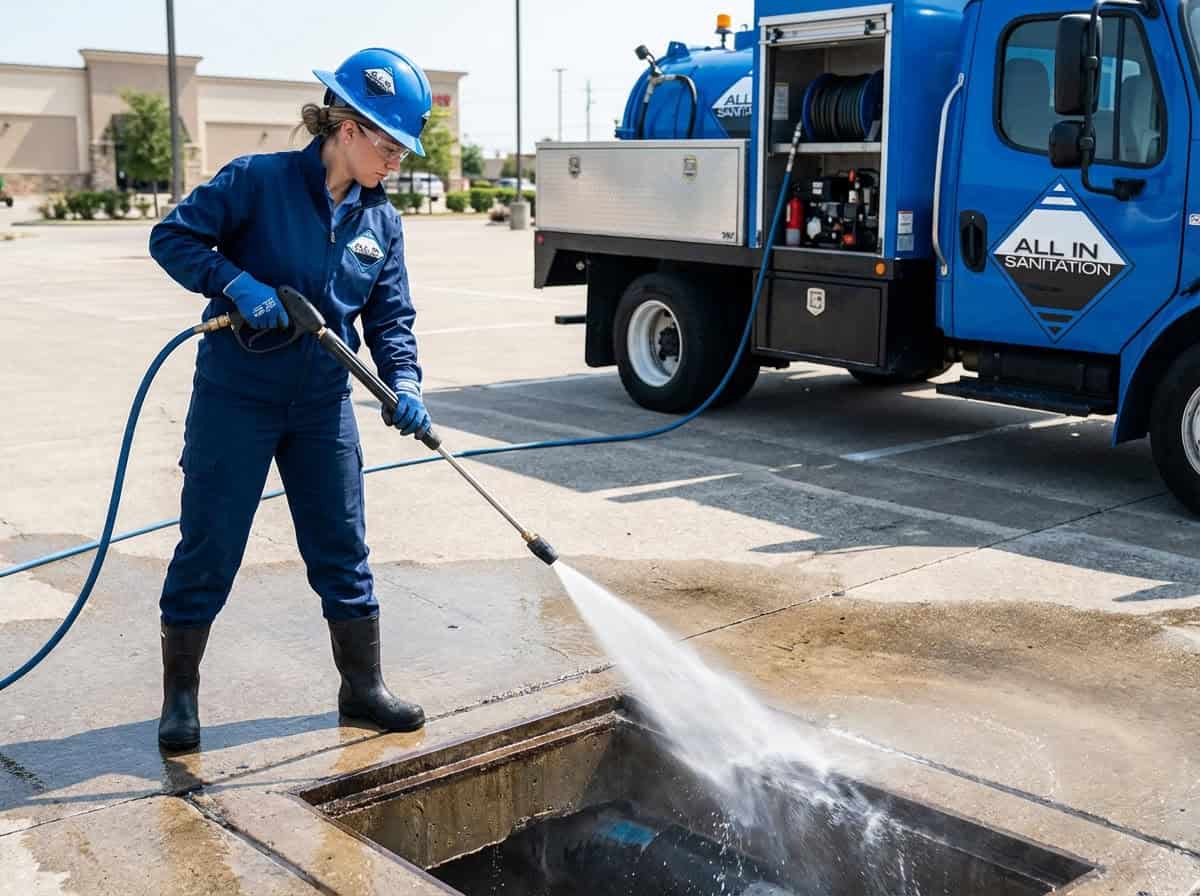
Hydro Jetting Services in Los Angeles County | All In Sanitation
Our Complete Guide to Professional Hydro Jetting Services for Septic Systems, Grease Traps & Drains.
High-Pressure Water Jetting Technology for Complete Pipe Restoration Across All 88 LA County Cities. Our company specializes in hydro jetting services in Los Angeles County for efficient, thorough pipe cleaning.
Eliminate stubborn blockages, remove years of buildup, and restore full flow capacity with Los Angeles County’s most advanced hydro jetting services. Serving residential, commercial, and industrial properties with 4,000 PSI precision cleaning.
- Phone: (818)698-4252
- Email: info@allinsanitation.com
Licensed & Insured | LA County Certified | 24/7 Emergency Response | 100% Satisfaction Guarantee
What Is Hydro Jetting? Understanding High-Pressure Water Drain Cleaning
Hydro jetting represents the most effective advancement in professional drain cleaning technology, utilizing high-pressure water streams to completely restore pipe interior surfaces rather than merely punching temporary holes through blockages. Unlike traditional mechanical methods that provide short-term relief, hydro jetting eliminates the root causes of drainage problems, delivering long-term solutions that protect your infrastructure investment.
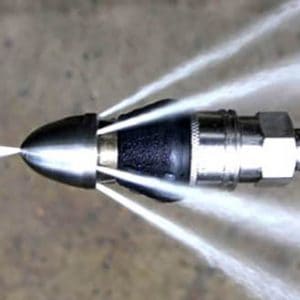 The Science Behind Hydro Jetting Technology
Professional hydro jetting systems generate water pressure ranging from 1,500 to 4,000 pounds per square inch (PSI), delivered through specialized nozzles designed for specific cleaning applications. This pressure, combined with water flow rates of 3 to 20 gallons per minute, creates a powerful scouring action that removes accumulated debris, mineral deposits, grease buildup, tree roots, and other obstructions from pipe walls.
The technology operates on principles of hydrodynamic cleaning, where high-velocity water streams create shear forces that break molecular bonds between pipe surfaces and contaminants. Unlike mechanical cutting or chemical dissolution, hydro jetting uses pure water—making it environmentally safe while delivering superior cleaning results.
Key Technical Specifications:
-
Pressure Range: 1,500 PSI (residential) to 4,000 PSI (industrial)
-
Flow Rate: 3-8 GPM (residential) to 18-20 GPM (municipal/commercial)
-
Temperature Capability: Ambient cold water to 250°F hot water
-
Nozzle Velocity: Up to 1,200 feet per second at point of impact
-
Effective Cleaning Distance: 500+ feet from insertion point
How Hydro Jetting Works: The Complete Process
Understanding the hydro jetting process helps property owners appreciate why this method outperforms alternatives and why professional execution matters for optimal results.
1: Video Camera Inspection Before any hydro jetting begins, certified technicians conduct thorough video pipe inspection using high-resolution CCTV cameras. This assessment identifies:
-
Blockage composition and severity
-
Pipe material, condition, and age
-
Presence of cracks, collapses, or structural damage
-
Optimal access points and nozzle selection
-
Potential risks requiring mitigation
2: Access Point Preparation Technicians establish clean access points through existing cleanouts, vent stacks, or strategically created entry points. Proper access ensures:
-
Safe equipment operation
-
Complete pipe coverage
-
Minimal disruption to property
-
Protection of surrounding infrastructure
3: Equipment Configuration Based on inspection findings, technicians configure:
-
Pressure settings appropriate for pipe material
-
Water temperature selection (hot vs. cold)
-
Nozzle type for specific blockage composition
-
Flow rate optimization for pipe diameter
4: High-Pressure Cleaning Execution The hydro jetting process proceeds systematically:
-
Initial penetration using forward-firing nozzles to establish flow paths
-
Progressive cleaning with rotating and angle-specific nozzles
-
Wall-to-wall scouring to remove all accumulated deposits
-
Final flush to evacuate dislodged debris
-
Verification inspection to confirm complete restoration
5: Post-Service Documentation Professional hydro jetting includes comprehensive documentation:
-
Before-and-after video inspection recordings
-
Pressure and flow rate logs
-
Service recommendations for ongoing maintenance
-
Compliance certificates for regulatory requirements
Hydro Jetting vs. Snaking: Making the Right Choice for Your Drain Problem
Property owners facing drainage issues often struggle to choose between hydro jetting and traditional snaking. While both methods address blockages, they operate on fundamentally different principles and deliver dramatically different results. Understanding these differences ensures you invest in the appropriate solution for your specific situation.
What Is Drain Snaking?
Drain snaking, also called augering or rootering, uses a flexible metal cable with an attached cutting head to physically penetrate and break apart blockages. The cable rotates as it advances, allowing the cutting head to:
-
Drill through compacted debris
-
Cut through tree roots
-
Break up solid obstructions
-
Create a path through the blockage
Types of Drain Snakes:
-
Hand augers: Manual operation for small residential drains
-
Motorized drain snakes: Electric or gas-powered for main lines
-
Closet augers: Specialized for toilet traps
-
Sectional machines: Heavy-duty cables for commercial applications
Comprehensive Comparison: Hydro Jetting vs. Snaking
| Factor | Hydro Jetting | Drain Snaking |
|---|---|---|
| Cleaning Mechanism | High-pressure water scouring entire pipe circumference | Mechanical cutting through blockage center only |
| Pipe Wall Contact | 360-degree cleaning of all interior surfaces | Minimal wall contact; focused on blockage path |
| Debris Removal | Complete evacuation of all accumulated material | Partial removal; remaining debris continues accumulating |
| Root Intrusion | Cuts and flushes roots; delays regrowth 3-4x longer | Cuts roots but leaves fragments that regrow quickly |
| Grease Buildup | Completely emulsifies and removes grease deposits | Punches hole through grease; leaves coating on walls |
| Mineral Scale | Dissolves and removes calcium/lime buildup | Cannot address hard mineral deposits effectively |
| Pipe Damage Risk | Safe for all pipe types when properly executed | Can damage older pipes, joints, or fragile materials |
| Longevity of Results | 12-24 months for maintained systems | 3-6 months before recurrence typical |
| Preventative Value | Restores pipe to near-original capacity | Temporary relief only |
| Environmental Impact | Uses only water; no chemicals | Mechanical only; no environmental concerns |
| Cost Efficiency | Higher initial cost, lower long-term expense | Lower initial cost, frequent repetition required |
| Emergency Suitability | Excellent for complete restoration | Better for immediate breakthrough in emergencies |
When to Choose Hydro Jetting Over Snaking
Select Hydro Jetting When:
1. Recurring Blockages Occur If you’ve snaked the same drain multiple times within 12-24 months, hydro jetting addresses the underlying cause—accumulated wall deposits that mechanical methods leave behind. Each snaking session leaves residual debris that accelerates future blockages.
2. Grease Is the Primary Problem Restaurant kitchens, food processing facilities, and residential kitchen lines with heavy cooking activity accumulate grease deposits that snakes cannot remove. Hydro jetting emulsifies grease completely, restoring full pipe diameter.
3. Tree Root Intrusion Is Present While snakes cut through roots, they leave root fragments and damaged sections that regrow within months. Hydro jetting cuts roots more thoroughly and flushes debris completely, extending regrowth intervals significantly.
4. Complete Pipe Restoration Is Needed Before trenchless pipe lining, pipe bursting, or property sales, hydro jetting prepares pipes by removing all interior buildup, ensuring new liners adhere properly and inspections reveal true pipe condition.
5. Multiple Fixtures Are Affected When blockages impact entire sections of your drainage system rather than single fixtures, hydro jetting cleans the complete network rather than just the immediate blockage point.
6. Preventative Maintenance Is the Goal Annual hydro jetting prevents emergency situations by maintaining pipes at optimal flow capacity, eliminating the gradual accumulation that leads to sudden failures.
7. Compliance Documentation Is Required For commercial properties, food service facilities, and regulated industries, hydro jetting provides video-verified cleaning documentation that satisfies inspection requirements.
When Snaking May Be the Better Initial Choice
Consider Drain Snaking When:
1. Immediate Emergency Breakthrough Is Needed For complete stoppages causing backups or flooding, snaking often achieves faster initial penetration to restore basic flow while scheduling comprehensive hydro jetting.
2. Budget Constraints Are Severe When immediate funds don’t permit hydro jetting investment, snaking provides temporary relief while planning for proper restoration.
3. Pipe Condition Is Unknown In very old or deteriorated systems, preliminary snaking with camera inspection may be safer to assess structural integrity before high-pressure application.
4. Simple, Single-Fixture Blockages Isolated toilet or sink clogs caused by foreign objects often resolve completely with snaking, making hydro jetting unnecessarily comprehensive.
5. Testing Flow Restoration After hydro jetting, snaking may verify complete blockage removal or address remaining compacted debris in complex situations.
The Hybrid Approach: Strategic Combination
Professional drain specialists often employ both methods strategically:
-
Snake first to establish initial flow and assess conditions
-
Video inspect to evaluate pipe condition and blockage composition
-
Hydro jet for comprehensive cleaning and long-term resolution
-
Final inspection to verify complete restoration
This approach maximizes effectiveness while managing costs and risks appropriately.
Los Angeles Hydro Jetting Services Applications: Septic Systems, Grease Traps & Commercial Drains
Hydro jetting serves distinct purposes across different drainage system types, each requiring specialized knowledge, equipment configuration, and execution protocols. Understanding these applications ensures proper service delivery and optimal outcomes.
Septic System Hydro Jetting Services
Septic systems in Los Angeles County face unique challenges due to soil conditions, usage patterns, and regulatory requirements. Hydro jetting addresses critical septic components that mechanical cleaning cannot effectively restore.
Septic Tank Inlet and Outlet Lines Over time, inlet lines from structures to septic tanks accumulate solids, grease, and paper products that reduce flow capacity. Outlet lines to drain fields develop biomat buildup—biological growth that seals pipe walls and restricts effluent distribution. Hydro jetting:
-
Removes accumulated solids without tank pumping
-
Restores outlet line capacity for drain field preservation
-
Extends intervals between required pumpings
-
Prevents premature drain field failure
Drain Field Laterals and Distribution Boxes The most critical—and expensive—septic system components benefit dramatically from hydro jetting:
-
Laterals: Perforated pipes distributing effluent into soil become clogged with biomat and root intrusion. Jetting restores perforation openings and lateral capacity.
-
Distribution boxes: These splitting chambers accumulate solids and develop uneven flow patterns. Jetting ensures equal distribution to all drain field zones.
-
Header pipes: Main distribution lines experience the heaviest buildup and require periodic restoration.
Septic System Hydro Jetting Indicators:
-
Slow draining throughout the house despite tank pumping
-
Sewage odors near drain field areas
-
Wet spots or lush vegetation over drain field
-
Backup during high-water-use periods
-
Required pumping intervals decreasing
-
Failed percolation tests
LA County Septic Considerations: Los Angeles County’s hillside communities (Malibu, Calabasas, Topanga, Agoura Hills) rely heavily on septic systems with challenging topography. Gravity distribution systems in these areas are particularly susceptible to line buildup due to:
-
Steep slopes creating velocity issues
-
Longer distribution lines with more joints
-
Limited access for traditional maintenance
-
Environmental sensitivity requiring non-invasive methods
Our technicians specialize in hillside septic hydro jetting, utilizing specialized equipment for long-distance applications and difficult access scenarios.
Grease Trap and Commercial Kitchen Hydro Jetting
Food service facilities face the most demanding drain maintenance requirements in Los Angeles County. Grease trap systems, kitchen lines, and floor drains accumulate fats, oils, and grease (FOG) that create unique cleaning challenges.
Grease Trap Outlet Lines Even with regular grease trap pumping, outlet lines develop heavy FOG deposits that:
-
Reduce flow capacity by 50-90% over time
-
Create acid conditions that corrode metal pipes
-
Generate foul odors affecting customer areas
-
Trigger compliance violations during inspections
-
Cause backups into kitchen fixtures
Hydro jetting grease trap lines requires specialized hot water application and degreasing nozzles that emulsify hardened grease deposits completely.
Kitchen Drain Lines Main kitchen drains handling wastewater from sinks, dishwashers, and prep areas accumulate:
-
Grease deposits cooling and solidifying on pipe walls
-
Food particle accumulation creating biological growth
-
Soap scum combining with grease to form concrete-like deposits
-
Mineral scale from hot water usage
Floor Drain Systems Commercial kitchen floor drains trap solids and grease that create:
-
Pest attraction and sanitation issues
-
Slip hazards from standing water
-
Health code violations
-
Unpleasant odors permeating dining areas
High-Volume Restaurant Considerations Los Angeles County’s diverse restaurant scene—from Downtown LA high-rises to beachfront establishments in Santa Monica and Manhattan Beach—presents varied hydro jetting requirements:
-
High-rise buildings: Gravity flow challenges and shared drainage systems require careful pressure management to prevent backup into neighboring units
-
Historic buildings: Aging cast iron and clay pipes demand lower pressure settings with specialized nozzles
-
Coastal environments: Salt air corrosion accelerates pipe deterioration, requiring gentler cleaning approaches
-
High-volume chains: Coordinated maintenance across multiple locations with standardized documentation
Commercial and Industrial Hydro Jetting
Beyond food service, Los Angeles County’s commercial and industrial facilities require hydro jetting for diverse applications:
Municipal and Storm Drain Systems
-
Catch basin and storm line cleaning before rainy season
-
Removal of sediment, trash, and vegetation accumulation
-
Prevention of flooding and combined sewer overflows
-
Compliance with municipal stormwater regulations
Industrial Process Lines
-
Manufacturing facility drain maintenance
-
Cooling tower and HVAC condensate lines
-
Process water and wastewater lines
-
Chemical and petroleum industry applications (cold water only)
Healthcare and Institutional Facilities
-
Hospital drain systems requiring sanitization protocols
-
School and university campus infrastructure
-
Hotel and hospitality complex networks
-
Apartment building and multi-family housing main lines
Commercial Building Main Sewers
-
Office building lateral connections
-
Retail center shared drainage systems
-
Parking structure and garage drains
-
Elevator pit and sump pump discharge lines
Hot Water vs. Cold Water Hydro Jetting: Temperature Selection Science
One of the most critical decisions in hydro jetting execution is water temperature selection. The choice between hot and cold water dramatically impacts cleaning effectiveness, safety, and application suitability. Professional technicians must understand thermodynamics, material science, and chemical reactions to optimize results.
Hot Water Hydro Jetting: Applications and Advantages
Hot water hydro jetting utilizes water heated to 120°F to 250°F (49°C to 121°C) through specialized heating units integrated into jetting equipment. This temperature range creates distinct advantages for specific applications.
Grease and Fat Emulsification Hot water hydro jetting excels at removing organic deposits, particularly:
-
Animal fats: Melting points range from 90°F to 120°F; hot water maintains these fats in liquid state for complete flushing
-
Vegetable oils: Lower melting points (70°F-90°F) respond immediately to hot water application
-
Soap scum: Hot water dissolves soap residue that binds with grease to form hard deposits
-
Bacterial biofilms: Heat destroys biological growth adhering to pipe walls
Chemical Reaction Acceleration Hot water increases chemical reaction rates, enhancing:
-
Detergent and degreaser effectiveness when additives are used
-
Mineral scale dissolution in combination with appropriate agents
-
Organic matter breakdown and digestion
Sanitization Benefits Temperature above 140°F provides significant sanitization:
-
Kills bacteria, viruses, and pathogens in drain systems
-
Eliminates odor-causing biological growth
-
Reduces pest attraction by removing food sources
-
Critical for healthcare, food service, and sensitive environments
Hot Water Jetting Specifications:
-
Temperature Range: 180°F-250°F for commercial applications
-
Heating Method: Diesel, propane, or electric inline heaters
-
Flow Impact: Slight pressure reduction due to heating system resistance
-
Cost Factor: 15-25% higher service cost due to fuel and equipment
When Hot Water Hydro Jetting Is Essential
1. Commercial Kitchen and Restaurant Drains Grease trap lines, kitchen mains, and floor drains require hot water to emulsify accumulated FOG deposits. Cold water simply pushes grease downstream where it re-solidifies, creating blockages in other system sections.
2. Food Processing Facilities USDA-inspected facilities and food manufacturing plants benefit from hot water’s sanitizing properties combined with superior organic deposit removal.
3. Residential Kitchen Lines with Heavy Grease Homes with frequent cooking, garbage disposal usage, or inadequate grease disposal practices develop hardened deposits requiring thermal assistance.
4. Odor Elimination Priorities When drain odors impact living or working spaces, hot water’s bacterial kill properties address root causes rather than masking symptoms.
5. Preventative Maintenance in High-Grease Environments Regular hot water jetting prevents the accumulation that leads to emergency situations and compliance violations.
Cold Water Hydro Jetting: Applications and Advantages
Cold water hydro jetting utilizes ambient temperature water (typically 50°F-70°F in Los Angeles County) without heating. While lacking thermal advantages, cold water offers distinct benefits for specific situations.
Structural Safety Cold water eliminates thermal stress risks:
-
PVC pipes: Temperature above 140°F can soften PVC, causing deformation or joint failure
-
Older clay pipes: Thermal shock can crack brittle, aged ceramic materials
-
Damaged pipes: Existing cracks or weaknesses may expand under thermal stress
-
Cement and concrete: Hot water can accelerate deterioration of cementitious materials
Chemical Stability Certain blockages and pipe contents react negatively to heat:
-
Chemical residues: Industrial facilities may have unknown chemical deposits that become hazardous when heated
-
Plastic debris: Some synthetic materials soften and become more difficult to remove when heated
-
Coal tar and certain sealants: Heat can melt and redistribute these materials rather than removing them
Equipment and Cost Efficiency Cold water systems offer operational advantages:
-
Simpler equipment: No heating systems to maintain or fuel
-
Lower operating costs: Reduced fuel consumption and equipment wear
-
Faster setup: No heating time required before service initiation
-
Environmental considerations: Lower carbon footprint without combustion heating
Pressure Optimization Cold water systems often achieve higher pressures since energy isn’t diverted to heating:
-
Higher PSI capability: Up to 4,000 PSI in commercial cold water units
-
Greater flow rates: Unrestricted by heating system capacity
-
Longer reach: Higher pressure enables effective cleaning at greater distances
When Cold Water Hydro Jetting Is Required
1. Unknown Pipe Materials When video inspection cannot definitively identify pipe composition—common in older Los Angeles properties—cold water eliminates thermal damage risk.
2. PVC and Plastic Pipe Systems Modern residential construction and many commercial buildings utilize PVC drain lines that require cold water protection.
3. Industrial and Chemical Applications Facilities with unknown or hazardous waste histories require cold water to prevent dangerous chemical reactions.
4. Root Intrusion Dominant Blockages While hot water helps with grease, pure mechanical cutting power matters most for root removal, making high-pressure cold water equally or more effective.
5. Mineral Scale and Hard Deposits Calcium, lime, and other mineral buildup respond better to mechanical action than thermal treatment. Cold water with appropriate nozzles effectively descales these deposits.
6. Storm Drain and Exterior Applications Outdoor drainage systems without grease accumulation clean effectively with cold water, reducing service costs unnecessarily inflated by heating.
Hybrid Temperature Approaches
Advanced hydro jetting operations utilize temperature flexibility strategically:
-
Start cold to assess pipe response and blockage composition
-
Apply heat when grease emulsification becomes necessary
-
Finish cold to flush emulsified materials completely without thermal damage risk
-
Zone-specific treatment using hot water in grease-impacted sections, cold water elsewhere
This sophisticated approach requires experienced technicians with advanced equipment but delivers optimal results across complex drainage systems.
Hydro Jetting Nozzle Technology: Precision Tools for Specific Applications
The nozzle represents the business end of hydro jetting equipment, transforming high-pressure water flow into targeted cleaning action. Different nozzle designs create distinct spray patterns, angles, and forces optimized for specific blockage types and pipe conditions. Understanding nozzle technology explains why professional hydro jetting outperforms consumer-grade alternatives and why technician expertise matters critically.
Forward-Firing Nozzles: Penetration and Initial Access
Design and Function Forward-firing nozzles direct water streams primarily ahead of the nozzle body, creating cutting and penetrating force in the direction of travel. These nozzles feature:
-
Central forward jet: High-pressure stream directly ahead for penetration
-
Rear-facing jets: Angled backward to propel nozzle forward and flush debris
-
Variable orifice sizes: Matched to pump capacity and pipe diameter
Primary Applications
-
Initial blockage penetration: Cutting through compacted debris to establish flow paths
-
Ice removal: Breaking through frozen pipe sections
-
Hard obstruction cutting: Addressing solid objects, construction debris, or severe root masses
-
Long-distance travel: Reaching blockages 500+ feet from access points
Pressure Considerations Forward-firing nozzles concentrate force in a small area, requiring careful pressure management to prevent:
-
Pipe wall damage from direct high-pressure impact
-
Uncontrolled nozzle advancement causing cable kinking
-
Splash-back creating safety hazards
Rotating/Spinning Nozzles: Wall-to-Wall Cleaning
Design and Function Rotating nozzles utilize water pressure to spin the nozzle head at high speeds (1,000-3,000 RPM), creating 360-degree cleaning action:
-
Chain-driven rotation: Water pressure drives internal turbines spinning the nozzle body
-
Offset jet angles: Multiple jets fire at angles to create rotation and wall contact
-
Controlled rotation speed: Pressure and flow rate determine spin velocity
Primary Applications
-
Complete pipe circumference cleaning: Removing deposits from all wall surfaces simultaneously
-
Grease and sludge removal: Centrifugal force distributes cleaning action evenly
-
Scale and buildup elimination: Mechanical scraping action from rotating jets
-
Preventative maintenance: Restoring pipe to near-original diameter
Efficiency Advantages Rotating nozzles clean 3-5x faster than stationary alternatives, reducing:
-
Water consumption per foot of pipe cleaned
-
Service time and labor costs
-
Property disruption duration
-
Equipment wear from prolonged operation
Root-Cutting Nozzles: Vegetation Intrusion Elimination
Specialized Design Features Root-cutting nozzles incorporate mechanical cutting elements:
-
Front-mounted cutting blades: Hardened steel or carbide teeth shred root masses
-
Rear-facing jets: Propel nozzle while flushing cut debris
-
Root saw attachments: Chains or cables with cutting teeth spin at high velocity
Root Removal Strategy Effective root cutting requires specific technique:
-
Penetration: Forward jets create path through root mass
-
Cutting: Rotating blades or chains shred root material
-
Flushing: Rear jets evacuate debris preventing re-compaction
-
Verification: Camera inspection confirms complete removal
Long-Term Effectiveness While no method permanently prevents root regrowth, hydro jetting with root-cutting nozzles:
-
Removes root masses more completely than mechanical snakes
-
Delays regrowth 3-4x longer than simple cutting
-
Allows chemical root treatment application to cut surfaces
-
Provides video documentation for property records
Degreasing Nozzles: FOG Deposit Specialists
Hot Water Integration Degreasing nozzles optimize hot water hydro jetting for grease removal:
-
Wide spray patterns: Maximize wall contact for emulsification
-
Low-angle jets: Create scouring action along pipe floor where grease accumulates
-
High-flow design: Volume matters more than pressure for grease flushing
Chemical Application Capability Advanced degreasing nozzles incorporate:
-
Chemical injection ports: Introduce degreasers at point of application
-
Foam generation: Create clinging cleaning agents for heavy deposits
-
Steam capability: Convert hot water to steam for maximum grease penetration
Sand and Sediment Nozzles: Heavy Material Removal
Design Characteristics
-
High-volume, lower-pressure jets: Move material without compaction
-
Wide-angle spread: Create flow patterns that suspend solids
-
Reverse flushing optimization: Propel backward while pushing debris to extraction point
Applications
-
Storm drain sediment: Remove accumulated sand, dirt, and debris
-
Construction debris: Clear gravel, concrete fragments, and job site materials
-
Septic tank solids: Break up and flush heavy organic accumulation
-
Industrial sludge: Manage process waste deposits
Corner and Bend Nozzles: Navigation Specialists
Articulated Design
-
Flexible joint sections: Navigate 90-degree turns and bends
-
Variable angle jets: Maintain cleaning effectiveness through direction changes
-
Reduced diameter: Access smaller lines and tight transitions
Critical Applications
-
Cast iron systems: Navigate hub-and-spigot joints common in older LA buildings
-
Long lateral connections: Maintain effectiveness through multiple direction changes
-
Offset pipe sections: Clean despite misaligned joints or settled pipes
Nozzle Selection Expertise: Why Technician Knowledge Matters
Proper nozzle selection requires understanding:
-
Pipe material and age: Determines safe pressure and angle selection
-
Blockage composition: Grease, roots, scale, and solids require different approaches
-
Pipe diameter: Nozzle size must match pipe for effective wall contact
-
Access limitations: Long runs or multiple bends constrain nozzle options
-
Downstream conditions: Prevent pushing debris into sensitive areas
Common Nozzle Selection Errors by Inexperienced Operators:
-
Using high-pressure forward jets in damaged clay pipes, causing breakage
-
Applying root cutters to grease blockages, ineffective and time-wasting
-
Selecting rotating nozzles too large for pipe diameter, preventing wall contact
-
Failing to match nozzle flow rate to pump capacity, reducing effectiveness
Our technicians carry 15-20 specialized nozzles per service vehicle and receive continuous training on selection optimization for Los Angeles County’s diverse infrastructure.
Preventative Hydro Jetting: The Economics of Routine Maintenance
Emergency drain cleaning represents the most expensive, disruptive, and risky approach to drainage system management. Preventative hydro jetting transforms drain maintenance from reactive crisis management to proactive asset protection, delivering substantial returns on investment while eliminating operational disruptions.
The True Cost of Emergency Drain Failures
Direct Emergency Costs
-
After-hours service premiums: 200-300% higher rates for nights, weekends, holidays
-
Emergency equipment mobilization: Specialized equipment and crew dispatch fees
-
Property damage remediation: Water damage, contamination cleanup, material replacement
-
Business interruption: Lost revenue during closures, spoiled inventory, customer defection
Los Angeles County Emergency Cost Examples:
-
Restaurant grease trap backup: $5,000-$15,000 emergency cleaning plus 2-7 days closure
-
Septic system failure: $10,000-$30,000 emergency pumping, repair, and drain field restoration
-
Commercial building sewer backup: $20,000-$50,000+ water damage, mold remediation, tenant relocation
-
Industrial process line failure: $50,000-$200,000+ production losses, rush shipping, contract penalties
Hidden Emergency Costs
-
Regulatory violations: Fines ranging from $1,000 to $25,000 per day in LA County
-
Insurance premium increases: Claims history affects future coverage costs
-
Reputation damage: Negative reviews, customer loss, competitive disadvantage
-
Employee productivity: Management distraction, staff overtime, morale impact
Preventative Hydro Jetting Economics
Cost Comparison Analysis
| Scenario | Emergency Response | Preventative Maintenance | Savings |
|---|---|---|---|
| Annual restaurant grease line service | $3,600 (3 emergency calls) | $1,200 (quarterly jetting) | $2,400 (67%) |
| Biennial septic lateral cleaning | $8,500 (emergency + damage) | $800 (routine service) | $7,700 (91%) |
| Commercial building main sewer | $15,000 (backup restoration) | $2,400 (annual maintenance) | $12,600 (84%) |
| Multi-location chain (5 stores) | $45,000 (emergencies) | $12,000 (program maintenance) | $33,000 (73%) |
Preventative Program Benefits Beyond Cost
1. Predictable Budgeting Fixed monthly or annual costs eliminate surprise expenses and enable accurate financial planning. Maintenance programs spread costs evenly rather than hitting budgets with unpredictable large expenditures.
2. Operational Continuity Scheduled maintenance occurs during planned downtime—overnight, early morning, or slow periods—eliminating business interruption. Emergency failures choose their own disruptive timing.
3. Extended Infrastructure Lifespan Regular cleaning prevents the corrosive buildup, pressure stress, and material degradation that shorten pipe life. Well-maintained drainage systems last 30-50% longer than neglected alternatives.
4. Compliance Assurance Documented preventative maintenance satisfies regulatory requirements, prevents violation notices, and supports insurance claims. Emergency responses often trigger regulatory scrutiny.
5. Property Value Protection Documented drainage system maintenance supports property valuations, facilitates sales, and prevents inspection failures that delay transactions or reduce prices.
Optimal Preventative Hydro Jetting Schedules
Restaurant and Food Service
-
High-volume (fast food, 24-hour): Monthly hot water jetting of grease lines
-
Full-service restaurants: Bi-monthly kitchen lines, quarterly floor drains
-
Catering facilities: Weekly during peak season, monthly off-season
-
Preventative ROI: 4:1 to 8:1 return on maintenance investment
Residential Properties
-
Single-family homes: Biennial main line jetting, annual if mature trees present
-
Multi-family buildings: Annual main sewer, biennial lateral lines
-
Hillside homes (Malibu, Calabasas): Annual septic lateral maintenance
-
Preventative ROI: 3:1 to 5:1 return on maintenance investment
Commercial and Industrial
-
Office buildings: Annual main sewer and storm drain maintenance
-
Retail centers: Quarterly high-traffic areas, annual full system
-
Manufacturing: Monthly process lines, quarterly sanitary sewers
-
Healthcare: Monthly sanitizing jetting for infection control
-
Preventative ROI: 5:1 to 12:1 return on maintenance investment
Institutional Facilities
-
Schools: Summer comprehensive jetting before academic year
-
Hospitals: Monthly critical drains, quarterly full system
-
Hotels: Monthly kitchen and laundry, quarterly full property
-
Preventative ROI: 6:1 to 15:1 return on maintenance investment
Los Angeles County Climate and Environmental Factors
Los Angeles County’s unique environment creates specific preventative maintenance requirements:
Drought and Water Conservation
-
Low-flow fixtures increase solids concentration in drains
-
Reduced water volume fails to self-clean lines effectively
-
More frequent jetting compensates for conservation impacts
Earthquake and Ground Movement
-
Seismic activity shifts pipes, creating offset joints that trap debris
-
Preventative cleaning prevents accumulation at stress points
-
Post-earthquake inspection and jetting verifies system integrity
Tree Canopy and Root Pressure
-
LA’s mature tree canopy aggressively seeks water sources
-
Root intrusion accelerates in drought conditions
-
Annual jetting with root treatment prevents infiltration
Seasonal Rain Patterns
-
Intense winter rains overwhelm partially blocked storm systems
-
Pre-season jetting prevents flooding and combined sewer overflows
-
Post-season cleaning removes accumulated debris
Certification, Training & Expertise: Why Technician Qualification Determines Outcome
Hydro jetting equipment is only as effective as the technician operating it. High-pressure water at 4,000 PSI can restore pipes to pristine condition or destroy them catastrophically depending on operator knowledge. Los Angeles County’s diverse infrastructure—from 1920s clay pipes in historic districts to modern PVC systems in new developments—demands technicians with comprehensive training, relevant certifications, and extensive local experience.
Required Certifications for Professional Hydro Jetting
State and County Licensing
-
California State Contractors License (C-42): Sanitation system contractor classification required for drain cleaning operations
-
LA County Sanitation Districts Certification: Specific authorization for work on county-maintained systems
-
Municipal Business Licenses: Current licenses in all 88 LA County cities served
-
Hazardous Materials Handling: OSHA-compliant training for waste management
Industry Certifications
-
NASSCO (National Association of Sewer Service Companies): Pipeline assessment and rehabilitation certification
-
PICA (Pipe Inspection Certification Association): Video inspection and documentation standards
-
WWETT (Water & Wastewater Equipment, Treatment & Transport): Comprehensive wastewater system training
-
OSHA 30-Hour Construction Safety: Workplace safety and hazard recognition
Equipment-Specific Certifications
-
Manufacturer Training: Certified operation of specific hydro jetting equipment brands
-
Hot Water Systems: Specialized training for heated water applications
-
Chemical Application: Safe handling and application of drain cleaning agents
-
Confined Space Entry: Safe work in tanks, vaults, and limited-access areas
All In Sanitation Technician Training Program
Our technicians undergo rigorous training exceeding industry standards:
Initial Certification (160 Hours)
-
40 hours classroom: Drain system theory, pipe materials, hydrodynamics
-
80 hours field observation: Supervised operation with senior technicians
-
40 hours supervised solo: Direct oversight of independent work
Ongoing Education (40 Hours/Year)
-
Quarterly manufacturer updates on equipment advances
-
Bi-annual safety recertification and protocol review
-
Annual LA County regulatory update training
-
Monthly case study reviews of complex projects
Specialized Certifications
-
Hillside septic systems: Advanced techniques for sloped installations
-
High-rise drainage: Pressure management in vertical systems
-
Historic building protocols: Gentle cleaning for aged infrastructure
-
Industrial applications: Chemical handling and process line cleaning
Critical Knowledge Areas for LA County Hydro Jetting
Pipe Material Identification and Response Los Angeles County’s building stock spans 100+ years of construction with diverse materials:
-
Clay/Vitrified Clay (VCP): 1920s-1960s, brittle, susceptible to cracking under pressure
-
Cast Iron: 1940s-1980s, durable but prone to scale buildup and corrosion
-
Orangeburg (fiber conduit): 1940s-1970s, extremely fragile, limited pressure tolerance
-
PVC/ABS: 1970s-present, flexible but temperature-sensitive
-
Concrete: Municipal and large commercial, durable but rough interior surface
Our technicians identify pipe materials through video inspection and adjust pressure, nozzle selection, and technique accordingly.
Soil and Geological Conditions LA County’s varied geology affects drainage systems:
-
Clay soils (San Fernando Valley): Expansive soils shift pipes, creating offset joints
-
Sandy soils (coastal areas): Greater root intrusion, different settlement patterns
-
Hillside terrain (Santa Monica Mountains): Gravity flow challenges, access difficulties
-
Earthquake zones: Seismic damage assessment and stress-point identification
Regulatory Environment Technicians must navigate complex overlapping jurisdictions:
-
LA County Sanitation Districts: FOG program requirements, manifest documentation
-
City of LA Bureau of Sanitation: Local ordinances and inspection protocols
-
Regional Water Quality Control Board: Environmental protection standards
-
Local municipalities: 88 different city requirements and permit systems
Environmental Considerations
-
Coastal Commission zones: Special protections for beach-adjacent properties
-
Sensitive habitat areas: Restrictions in Santa Monica Mountains and wetlands
-
Groundwater protection: Wellhead protection area protocols
-
Stormwater regulations: MS4 permit compliance for discharge
Competitor Comparison: Why Certification Matters
| Qualification Factor | All In Sanitation | Typical Competitor |
|---|---|---|
| State Contractor License | C-42 Sanitation Systems (required) | Often unlicensed or improper classification |
| NASSCO Certification | 100% of field technicians | Rarely held |
| LA County Certification | Current for all districts | Often expired or missing |
| Manufacturer Training | Certified for all equipment operated | Self-taught or informal training |
| Continuing Education | 40 hours/year mandatory | No formal program |
| Video Inspection Certification | PICA certified technicians | Basic operation without certification |
| Safety Training | OSHA 30-hour, confined space certified | Minimal or no formal safety training |
| Local Experience | Average 8 years LA County specific | High turnover, limited local knowledge |
Quality Assurance and Accountability
Pre-Service Protocols
-
Video inspection by certified technicians before any jetting
-
Written assessment of pipe condition and recommended approach
-
Customer approval of scope and methodology
-
Safety briefing for property occupants
Service Execution Standards
-
Pressure logging throughout service for documentation
-
Continuous video monitoring when possible
-
Adherence to manufacturer specifications for equipment
-
Immediate cessation if unexpected conditions encountered
Post-Service Verification
-
Post-jetting video inspection confirming results
-
Flow testing to verify restored capacity
-
Written report with recommendations for ongoing maintenance
-
Digital documentation uploaded to customer portal
Warranty and Guarantee
-
30-day service guarantee: Free return if blockage recurs due to incomplete cleaning
-
Compliance guarantee: Fine coverage for documentation errors
-
Damage protection: Full repair coverage if service causes damage (extremely rare with proper technique)
Why Choose All In Sanitation for Hydro Jetting in Los Angeles County
Los Angeles County property owners have numerous options for drain cleaning services. Our hydro jetting program distinguishes itself through technical superiority, comprehensive coverage, financial protection, and unwavering commitment to customer outcomes.
1. Advanced Equipment Fleet
Capacity and Capability
-
Trailer-mounted units: Up to 4,000 PSI, 18 GPM for commercial and municipal applications
-
Truck-mounted systems: Self-contained water supply for remote locations
-
Portable electric units: Indoor and sensitive environment applications
-
Hot water capability: 250°F maximum temperature for grease applications
-
Video integration: Real-time inspection during jetting when beneficial
Technology Advantages
-
Digital pressure monitoring: Precise control prevents pipe damage
-
Flow meters: Verify adequate volume for debris evacuation
-
Remote operation: Technician safety in hazardous environments
-
GPS tracking: Real-time crew location for emergency response
Maintenance Standards
-
Daily equipment inspection and calibration
-
Weekly comprehensive maintenance protocols
-
Manufacturer-scheduled overhaul compliance
-
Backup equipment availability prevents service delays
2. County-Wide Coverage with Local Expertise
Complete Geographic Coverage
-
All 88 incorporated cities served
-
Unincorporated LA County areas
-
Remote locations (Catalina Island service available)
-
Emergency response throughout 4,751 square miles
Local Knowledge Advantages
-
Specific requirements for each municipality
-
Relationship with local inspectors and officials
-
Understanding of regional soil and geological conditions
-
Familiarity with neighborhood-specific infrastructure ages and types
Multi-Location Coordination
-
Single provider for chain businesses and property portfolios
-
Standardized service quality across all locations
-
Consolidated billing and documentation
-
Dedicated account management for complex operations
3. Comprehensive Service Integration
Drainage System Expertise Hydro jetting doesn’t exist in isolation. Our technicians understand complete drainage ecosystems:
-
Septic system integration: Jetting as component of overall septic health
-
Grease trap coordination: Alignment with pumping schedules
-
Storm drain connection: Roof drains, area drains, and catch basins
-
Municipal interface: Private-to-public connection maintenance
Maintenance Program Compatibility
-
Hydro jetting scheduled within preventative maintenance programs
-
Coordination with other services (pumping, inspection, repair)
-
Documentation integration for compliance management
-
Cost optimization through service bundling
4. Financial Protection and Transparency
Upfront Pricing
-
Written estimates before work commencement
-
No hidden fees or surprise charges
-
Clear explanation of factors affecting cost
-
Options presented at different service levels
Value Guarantees
-
Lowest price guarantee: Match any licensed competitor’s written estimate
-
Satisfaction guarantee: Full refund if service fails to meet expectations
-
Compliance guarantee: Fine coverage for our documentation errors
-
Response time guarantee: Credits for late emergency arrivals
Insurance and Protection
-
$2 million general liability coverage
-
Workers compensation for all employees
-
Commercial auto coverage for fleet
-
Professional liability/errors and omissions coverage
5. Documentation and Compliance Excellence
Digital Record Keeping
-
Customer portal access to all service records
-
Video inspection archives with date/time stamps
-
Pressure and flow logs for technical verification
-
Photo documentation of access points and conditions
Regulatory Compliance Support
-
Waste manifests for grease and septic waste
-
Disposal documentation at EPA-certified facilities
-
Compliance certificates for inspections
-
Audit support for franchise and corporate requirements
Environmental Responsibility
-
100% grease recycling to biofuel production
-
Water reclamation where feasible
-
Carbon-neutral operations commitment
-
EPA-compliant waste disposal exclusively
6. Emergency Response Capability
24/7/365 Availability
-
Live answering always, never voicemail
-
Average 60-minute emergency dispatch
-
Two-hour arrival guarantee for critical situations
-
Fully equipped emergency vehicles
Emergency Equipment
-
Dedicated emergency fleet separate from scheduled service
-
Backup equipment prevents delays
-
Inventory of common repair parts
-
Temporary bypass capabilities for critical systems
7. Customer Experience Focus
Communication Standards
-
Appointment confirmation 24 hours in advance
-
Technician arrival notification with photo and bio
-
Real-time updates if delays occur
-
Post-service follow-up within 48 hours
Property Protection
-
Shoe covers and protective barriers
-
Work area containment and cleanup
-
Landscaping protection in exterior work
-
Interior protection for residential services
Accessibility
-
Spanish-speaking technicians available
-
TDD/TTY compatibility
-
Senior and disability accommodation protocols
-
Flexible scheduling for operational requirements
Hydro Jetting Cost Guide for Los Angeles County
Understanding hydro jetting costs helps property owners budget appropriately and evaluate service quotes. While specific pricing requires site assessment, general ranges provide planning guidance.
Residential Hydro Jetting Costs
| Service Type | Complexity | Price Range | Typical Scope |
|---|---|---|---|
| Kitchen line jetting | Low | $350-$550 | Single line, accessible cleanout, moderate blockage |
| Main sewer line | Medium | $500-$850 | House to street lateral, standard access |
| Septic lateral lines | Medium-High | $600-$1,200 | Tank to drain field, multiple laterals |
| Storm drain cleaning | Variable | $400-$900 | Roof drains, area drains, catch basins |
| Root intrusion removal | High | $700-$1,500 | Mechanical cutting + jetting, video verification |
| Whole-house system | Comprehensive | $1,200-$2,500 | All accessible lines, preventative maintenance |
Factors Affecting Residential Cost:
-
Access difficulty: Buried cleanouts, limited space, interior vs. exterior
-
Blockage severity: Time and water volume required
-
Pipe length: Distance from access point to blockage
-
Pipe condition: Fragile pipes requiring lower pressure/slower work
-
Emergency timing: After-hours, weekend, or holiday service
Commercial Hydro Jetting Costs
| Service Type | Facility Size | Price Range | Service Frequency |
|---|---|---|---|
| Restaurant kitchen lines | Small (1-2 traps) | $400-$700 | Monthly recommended |
| Restaurant kitchen lines | Medium (3-5 traps) | $700-$1,200 | Bi-weekly recommended |
| Restaurant kitchen lines | Large (6+ traps) | $1,200-$2,500 | Weekly recommended |
| Commercial main sewer | Small building | $800-$1,500 | Annual |
| Commercial main sewer | Large facility | $1,500-$4,000 | Semi-annual |
| Industrial process lines | Variable | $1,000-$5,000+ | Per maintenance schedule |
| Municipal/storm systems | Per project | $2,000-$10,000+ | Seasonal or as needed |
Commercial Cost Factors:
-
FOG volume: Grease accumulation severity
-
Operating hours: After-hours service requirements
-
Documentation needs: Compliance reporting complexity
-
Multi-location coordination: Travel and logistics
-
Equipment requirements: Hot water, specialized nozzles, chemical injection
Preventative Maintenance Program Pricing
Residential Programs:
-
Basic: $400/year (annual main line jetting) — Saves 30% vs. emergency
-
Standard: $700/year (biennial main line + annual kitchen) — Saves 40% vs. emergency
-
Comprehensive: $1,200/year (quarterly kitchen + annual main + septic lateral) — Saves 50% vs. emergency
Commercial Programs:
-
Restaurant Basic: $500/month (monthly kitchen lines) — Saves 35% vs. emergency
-
Restaurant Standard: $800/month (bi-weekly kitchen + quarterly hydro) — Saves 45% vs. emergency
-
Restaurant Comprehensive: $1,000/month (weekly service + full maintenance) — Saves 55% vs. emergency
Value Comparison: All In Sanitation vs. Competitors
| Cost Factor | All In Sanitation | Typical Competitor |
|---|---|---|
| Upfront estimate accuracy | 95% (detailed inspection) | 70% (phone estimates) |
| Hidden charges | None | Common (access fees, disposal, after-hours) |
| Emergency surcharge | None for program members | 150-300% additional |
| Video inspection included | Yes (before and after) | Often extra ($200-$400) |
| Compliance documentation | Included | Often unavailable |
| Follow-up service | 30-day guarantee | Limited or none |
| Long-term cost (5 years) | $3,000-$6,000 (program) | $8,000-$15,000 (emergencies) |
Frequently Asked Questions About Hydro Jetting Services in Los Angeles
Is hydro jetting safe for old pipes?
Yes, when performed by certified technicians who adjust pressure and technique for pipe material and condition. We conduct video inspection before jetting to assess pipe integrity. For very old or damaged pipes, we use lower pressure settings and specialized nozzles that clean effectively without causing damage. Clay pipes from the 1920s-1960s and fragile Orangeburg pipes require particular care, but can usually be safely jetted at appropriate pressures (1,500-2,500 PSI vs. 4,000 PSI for modern PVC).
How long does hydro jetting take?
Most residential services complete in 1-3 hours, including setup, video inspection, jetting, and cleanup. Commercial kitchen lines typically take 2-4 hours depending on length and blockage severity. Main sewer lines from house to street average 2-3 hours. Complex commercial or industrial systems may require 4-8 hours or multiple sessions. Emergency services prioritize speed while maintaining quality, often completing in 50-75% of standard time.
Will hydro jetting damage my landscaping?
Professional hydro jetting minimizes landscape impact through careful access selection and protective measures. We use existing cleanouts when possible, avoiding excavation. When access creation is necessary, we limit disruption to 2-foot square areas and restore surfaces after completion. Hydro jetting actually preserves landscaping better than excavation repairs by avoiding the need to dig up damaged pipes. Our technicians place protective barriers and clean work areas thoroughly.
How often should I have hydro jetting performed?
Frequency depends on usage, pipe age, and system type. Restaurants and food service should jet kitchen lines monthly to quarterly. Residential properties benefit from biennial main line jetting, or annually if mature trees are present. Commercial buildings should jet main sewers annually. Septic laterals in hillside areas need annual maintenance. We provide specific recommendations based on video inspection findings and can establish automated scheduling so you never have to remember.
Can hydro jetting remove tree roots permanently?
Hydro jetting with root-cutting nozzles removes root masses more completely than mechanical snakes, but cannot permanently prevent regrowth. Roots enter through joints and cracks seeking water, and will eventually return. However, jetting extends intervals between root problems 3-4x longer than snaking. For permanent solutions, we recommend jetting combined with pipe lining to seal entry points, or traditional repair/replacement of damaged sections. Chemical root treatments applied after jetting further delay regrowth.
What’s the difference between hydro jetting and power washing?
While both use water pressure, they differ dramatically in application and capability. Power washing operates at 1,500-3,000 PSI for surface cleaning with high water volume. Hydro jetting uses specialized nozzles creating focused, high-velocity streams (up to 4,000 PSI) designed for pipe interior scouring. Jetting equipment includes video inspection, root cutters, and specialized nozzles impossible with power washers. Attempting pipe cleaning with power washing equipment is ineffective and potentially dangerous.
Do you use chemicals with hydro jetting?
Pure water hydro jetting is our standard and handles most situations effectively. However, we offer environmentally safe enzymatic and bacterial additives for severe grease buildup, and can apply root-killing agents after root removal when requested. All chemicals are EPA-approved for drainage systems and applied by certified technicians. We never use acid or caustic chemicals that damage pipes or create environmental hazards.
Is hydro jetting environmentally friendly?
Yes, hydro jetting is among the most environmentally responsible drain cleaning methods. It uses only water—no harsh chemicals that contaminate waterways. Our equipment includes water recycling capabilities where feasible. We dispose of all waste at EPA-certified facilities, recycle grease into biofuel, and maintain carbon-neutral operations. Hot water jetting eliminates bacteria without antibiotics or disinfectants that create resistant strains.
Can I hydro jet my drains myself?
Consumer-grade hydro jetting equipment (pressure washers with attachments) lacks the pressure control, specialized nozzles, and video verification necessary for safe, effective pipe cleaning. Improper use damages pipes, creates safety hazards from high-pressure water injection, and often fails to resolve underlying problems. Professional hydro jetting requires training in pipe assessment, pressure physics, and safety protocols. The cost of repairing DIY damage far exceeds professional service investment.
What should I do to prepare for hydro jetting service?
Ensure clear access to cleanout points (move vehicles, unlock gates, clear storage items). Identify and mark septic tank lids if applicable. Notify us of any known pipe damage, recent repairs, or unusual drainage patterns. For interior work, clear under-sink areas and protect valuable items. We’ll handle all equipment setup, protective measures, and cleanup. For commercial kitchens, schedule during closed hours or low-activity periods when possible.
Schedule Your Hydro Jetting Service Today
Get Your Video Inspection and Assessment
Our comprehensive evaluation includes:
-
High-resolution video pipe inspection
-
Blockage composition analysis
-
Pipe condition assessment
-
Written service recommendation
-
Upfront pricing with no obligation
Phone: (818)698-4252
Email: info@allinsanitation.com
Serving All 88 Cities in Los Angeles County | 24/7 Emergency Response | Licensed & Insured
