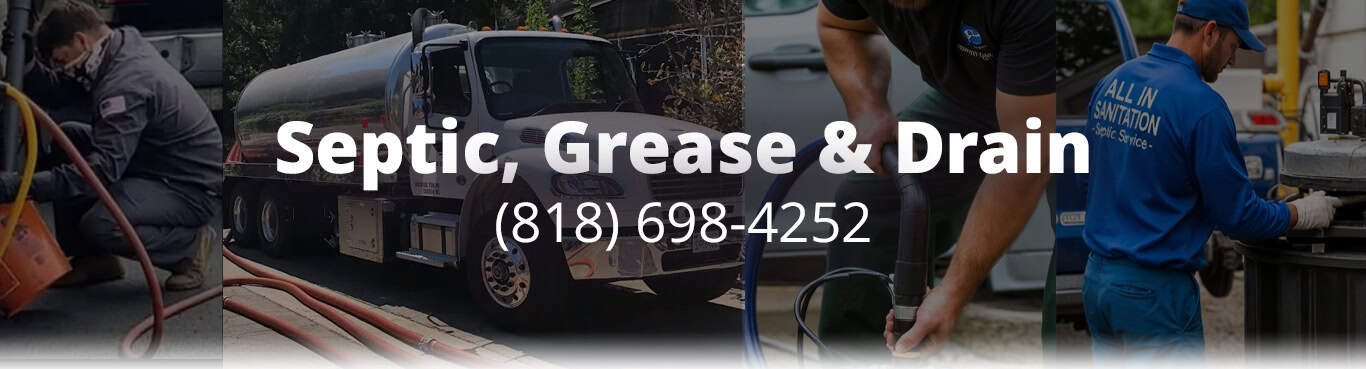
Los Angeles, Grease Trap Cleaning & Pumping
Restaurant Grease Interceptor Service
Professional grease trap cleaning, pumping, and maintenance for Los Angeles and Ventura County restaurants. Certified FOG waste haulers, same-day emergency service, health department compliant. Serving Santa Monica, Burbank, Pasadena, Hollywood & all LA County.
Contact Us Anytime!
- Phone: (818) 698-4252
- Email: info@allinsanitation.com
- Office Hours: Monday–Saturday, 6:00 AM – 7:00 PM
- Emergency Service: 24/7 including all holidays
- Emergency Response Time : 90-minutes
- Same-Day Service
- Licensed FOG Hauler
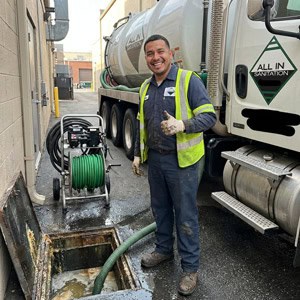
Quick Answers: Grease Trap Cleaning Questions for Los Angeles Restaurants
How much does grease trap cleaning cost in Los Angeles?
Grease trap cleaning in Los Angeles costs $250 to $600 depending on trap size and accessibility.
- Indoor under-sink traps (20–50 gallons) average $250–$350
- Outdoor underground interceptors (1,000–5,000 gallons) range from $400–$600
- High-volume kitchens requiring monthly service receive discounted rates.
- Emergency after-hours service adds $500.
How often do restaurants need grease trap cleaning in California?
California restaurants must clean grease traps every 30 to 90 days based on cooking volume
- Los Angeles County enforces the 25% Rule—cleaning is mandatory when grease and solids exceed 25% of trap capacity regardless of schedule.
- Fast food and high-volume kitchens need monthly service.
- Moderate-volume restaurants require 60-day intervals.
- Failure to maintain records results in $250–$1,000 daily fines.
What happens if a restaurant doesn’t clean its grease trap?
Neglected grease traps cause sewer backups, kitchen closures, health code violations, and environmental fines.
- Fats, oils, and grease (FOG) solidify in pipes, causing blockages that shut down operations.
- Los Angeles County health inspectors review maintenance logs during routine inspections.
- Non-compliance triggers immediate fines and potential business closure until corrected.
Is grease trap cleaning required by law in Los Angeles County?
Yes. Los Angeles County Code Title 20 requires all food service establishments to maintain grease traps and document cleaning frequency. The county mandates use of licensed waste haulers with proper manifest documentation. Random inspections verify compliance, and violations are reported to the California Regional Water Quality Control Board.
Professional Grease Trap Cleaning Services Los Angeles
Indoor Grease Trap Cleaning
Under-sink and indoor grease traps (20–100 gallons) require frequent maintenance due to high kitchen temperatures keeping FOG in liquid form until cooling causes blockages. We provide discreet, efficient service that minimizes kitchen disruption.
Indoor Trap Service Includes:
-
Complete evacuation of fats, oils, and grease
-
Scraping of solidified deposits from walls and baffles
-
Hot water flush of inlet and outlet lines
-
Inspection of gaskets, seals, and hardware
-
Reassembly and leak testing
-
Manifest documentation for health department
-
Odor control treatment
Indoor Trap Pricing:
-
20–35 gallon traps: $250–$300
-
50 gallon traps: $300–$375
-
75–100 gallon traps: $375–$450
-
Monthly service contracts: 15% discount
-
After-hours service: +$500
Service Frequency Recommendations:
-
High-volume frying: Every 30 days
-
Moderate cooking: Every 45–60 days
-
Light food prep: Every 90 days
Outdoor Grease Interceptor Pumping
Underground grease interceptors (1,000–5,000+ gallons) serve larger restaurants, shopping centers, and institutional kitchens. These systems require specialized vacuum equipment and thorough documentation.
Outdoor Interceptor Service Includes:
-
High-capacity vacuum pumping of entire contents
-
Pressure washing of interior walls and baffles
-
Inspection of inlet/outlet tees and flow restrictors
-
Structural assessment for cracks or root intrusion
-
Sample testing if required by jurisdiction
-
Waste manifest and disposal documentation
-
Electronic service records with photos
Outdoor Interceptor Pricing:
-
1,000–1,500 gallons: $400–$500
-
2,000–3,000 gallons: $500–$650
-
4,000–5,000 gallons: $650–$800
-
5,000+ gallons: Custom quote
-
Multiple locations: Volume discounts available
Access Requirements:
-
Manhole covers must be accessible (no parking obstructions)
-
Lids within 100 feet of truck access
-
Clearance for vacuum truck (12-foot height, 8-foot width)
-
Locked facilities require on-site manager present
High-Volume Kitchen Specialists
Los Angeles high-volume kitchens—fast food chains, casinos, stadiums, and 24-hour diners—generate extraordinary FOG loads requiring specialized programs.
High-Volume Services:
-
Bi-weekly or weekly pumping: Preventive schedules based on FOG production rates
-
Grease recovery units (GRUs): Automated skimming system maintenance
-
Solids separation: Strainer and screen cleaning
-
Drain line jetting: High-pressure cleaning of grease-laden pipes
-
Used cooking oil collection: Coordinated grease and oil service
-
24/7 emergency response: Overflow and backup prevention
Program Benefits:
-
Predictable monthly costs
-
Priority scheduling (no waiting)
-
Dedicated account manager
-
Compliance guarantee
-
Equipment failure prevention
Los Angeles Emergency Grease Trap Cleaning Service
Grease trap emergencies shut down kitchens, create health hazards, and damage property. All In Sanitation provides 24/7 emergency grease trap pumping throughout Los Angeles with 60–90 minute response times.
Emergency Situations:
-
Grease trap overflow: FOG surfacing in kitchen or outdoors
-
Complete blockage: Sewage backup into sinks and floor drains
-
Health department citation: Immediate compliance required
-
Pre-inspection rush: Scheduled health inspection tomorrow
-
Holiday/weekend failures: Critical timing for busy periods
Emergency Response Process:
-
Immediate dispatch upon call
-
Technician arrival within 60–90 minutes
-
Emergency pumping to stop overflow
-
Line clearing if blocked
-
Cause identification and repair recommendations
-
Documentation for health department
-
Follow-up scheduling for permanent solution
Emergency Pricing:
-
Standard hours emergency: Base rate + $500
-
After-hours (8 PM–6 AM): Base rate + $500
-
Weekend/holiday: Base rate + $500
-
Holiday after-hours: Base rate + $500
Prevention Tip: Schedule pumping before holiday weekends and busy seasons. Emergency rates cost 40–60% more than scheduled service, and availability isn’t guaranteed during peak demand.
Grease Trap Cleaning Inspection & Compliance Services Los Angeles
Health Department Compliance Inspections
Los Angeles County Department of Public Health conducts routine and complaint-driven inspections of food service establishments. Grease trap maintenance is a primary inspection point.
Compliance Requirements:
-
Maintenance logs: 90 days of service records on-site
-
Licensed hauler documentation: Waste manifest forms for each pumping
-
Frequency verification: Service intervals match FOG production
-
Functional equipment: Traps must operate as designed
-
No bypassing: Direct connection of grease-laden waste to sewer prohibited
Common Violations:
| Violation | Fine | Correction Time |
|---|---|---|
| Missing maintenance logs | $250–$500 | 24 hours |
| Excessive FOG accumulation (>25%) | $500–$1,000/day | Immediate |
| Unlicensed hauler use | $1,000–$5,000 | Immediate |
| Grease trap bypass or removal | $5,000–$25,000 | Immediate closure |
| Environmental discharge | EPA fines + local penalties | Immediate |
Our Compliance Support:
-
Electronic record keeping with backup
-
Automated service reminders
-
Pre-inspection verification visits
-
Health department liaison services
-
Violation response and correction
Pre-Inspection Grease Trap Service
Scheduled health inspection? Don’t risk violations. Our pre-inspection service ensures your grease management program meets all Los Angeles County requirements.
Pre-Inspection Package ($350–$500):
-
Complete grease trap pumping and cleaning
-
Full system inspection and minor repairs
-
Maintenance log review and organization
-
Manifest documentation verification
-
Written compliance certification
-
30-day follow-up guarantee
Timeline: Schedule 3–5 days before inspection to allow for any needed corrections.
FOG Compliance Reporting
Los Angeles County and the California Regional Water Quality Control Board require FOG discharge reporting from large generators.
Reporting Services:
-
FOG production quantification
-
Waste manifest compilation
-
Environmental compliance documentation
-
Annual reporting preparation
-
Water quality board correspondence
Who Needs Reporting:
-
Food processing facilities
-
Large institutional kitchens (hospitals, universities)
-
Shopping centers with multiple restaurants
-
Facilities with history of sewer blockages
Grease Trap Cleaning Maintenance Programs Los Angeles
Preventative Maintenance Plans
Regular maintenance prevents emergencies, extends equipment life, and ensures compliance. We offer customized programs for Los Angeles restaurants.
Basic Maintenance Plan ($200/month)
-
Monthly grease trap pumping (up to 50 gallons)
-
Basic drain maintenance
-
24/7 emergency response
-
10% discount on additional services
Standard Maintenance Plan ($350/month)
-
Bi-weekly grease trap service
-
Quarterly hydro jetting of grease lines
-
Used cooking oil collection coordination
-
Compliance documentation management
-
15% discount on additional services
Comprehensive Maintenance Plan ($500/month)
-
Weekly grease trap service
-
Monthly hydro jetting
-
Full drain line maintenance
-
Used cooking oil collection included
-
Equipment inspection and minor repairs
-
Compliance guarantee with fine coverage
-
20% discount on additional services
Custom Programs: Large facilities, multi-location chains, and institutional clients receive customized proposals based on FOG production analysis.
Grease Trap Additives & Biological Treatment
Enzyme and bacterial additives support grease trap function between pumping, but do not replace physical cleaning.
Biological Additives:
-
Break down FOG into simpler compounds
-
Reduce odors and hydrogen sulfide production
-
Improve flow characteristics
-
Application: Weekly dosing recommended
Enzyme Treatments:
-
Target specific fats and oils
-
Prevent grease mat formation
-
Enhance separator efficiency
-
Application: Bi-weekly for high-volume kitchens
Important: Additives reduce pumping frequency by days, not weeks or months. Claims of eliminating pumping are false and violate environmental regulations. We provide professional-grade treatments as part of maintenance programs—avoid consumer products with unproven claims.
Los Angeles Grease Trap Cleaning Service Areas
Westside & Coastal
- Santa Monica Grease Trap Services Beachfront restaurants face strict environmental regulations and high inspector scrutiny. We specialize in Santa Monica’s FOG compliance requirements, including enhanced documentation and coastal discharge protections.
- Malibu Grease Trap Services Coastal canyon restaurants with challenging access and sensitive watersheds. Experience with Malibu Lagoon protection requirements and septic-grease system coordination.
- Venice & Marina del Rey High-density restaurant districts with aging infrastructure. Frequent service for tourist-heavy locations with seasonal demand fluctuations.
San Fernando Valley
- Burbank Grease Trap Services Media district restaurants, studio commissaries, and airport-adjacent facilities. Experience with high-volume catering and event-based FOG production.
- Glendale Grease Trap Services Armenian and Middle Eastern restaurant specialists handling high-fat cuisines. Knowledge of Glendale’s specific health department protocols.
- Studio City, Sherman Oaks, Encino Valley restaurant row expertise with late-night service hours for bars and clubs.
Metro Los Angeles
- Downtown Los Angeles Grease Trap Services High-rise grease interceptors, food halls, and institutional kitchens. Specialized equipment for basement and sub-basement access.
- Hollywood Grease Trap Services Entertainment venue specialists handling event-based volume spikes. Discreet service for high-profile establishments.
- Koreatown & Mid-City Asian cuisine specialists with wok-heavy, high-temperature FOG management experience.
- Beverly Hills & West Hollywood Luxury dining and hotel kitchen service with white-glove standards.
Pasadena & Foothills
- Pasadena Grease Trap Services Historic district restaurants with legacy plumbing and preservation requirements.
- Old Town Pasadena High-traffic tourist district with strict aesthetic and access requirements.
Ventura County
- Ventura & Oxnard Grease Trap Services Coastal and agricultural processing facilities with unique FOG profiles.
- Thousand Oaks & Simi Valley Suburban restaurant chains and shopping center food courts.
Types of Grease Traps & Interceptors
Hydromechanical Grease Traps (HGT)
Small under-sink units (10–100 gallons) using baffles and air entrainment to separate FOG. Common in small restaurants and retrofit installations.
Characteristics:
-
Stainless steel or plastic construction
-
Flow rates of 10–50 gallons per minute
-
Require frequent maintenance (every 30 days typical)
-
Indoor installation only
Maintenance Needs:
-
Complete pumping every 30–90 days
-
Baffle inspection and cleaning
-
Seal and gasket replacement as needed
-
Flow rate verification
Gravity Grease Interceptors (GGI)
Large concrete or fiberglass underground tanks (1,000–5,000+ gallons) using retention time for separation. Required for new construction and large facilities.
Characteristics:
-
Concrete, fiberglass, or HDPE construction
-
Retention time of 30 minutes minimum
-
Longer service intervals (60–90 days typical)
-
Outdoor installation with manhole access
Maintenance Needs:
-
Vacuum pumping of entire contents
-
Pressure washing of walls and baffles
-
Structural inspection for cracks or leaks
-
Inlet/outlet tee condition assessment
Automatic Grease Removal Units (AGRU)
Mechanical skimming systems that continuously remove FOG into collection containers. Also called Grease Recovery Units (GRUs).
Characteristics:
-
Automated FOG skimming
-
Reduced pumping frequency
-
Higher initial cost, lower maintenance
-
Requires electricity and regular component service
Maintenance Needs:
-
Weekly collection container emptying
-
Monthly component inspection
-
Quarterly deep cleaning
-
Annual mechanical service
High-Temperature Grease Handling
Los Angeles Asian and Mediterranean restaurants often operate woks and fryers at 350°F+, creating unique FOG challenges.
Specialized Services:
-
High-temperature grease trap design consultation
-
Enhanced cooling line installation
-
Frequent service schedules (bi-weekly)
-
Fire safety compliance verification
Grease Trap Problem Diagnosis
Slow Drains in Kitchen Sinks
- Indication: Grease trap at capacity or outlet blockage Immediate Action: Stop using sinks, call for emergency pumping Prevention: Increase service frequency, install strainers, staff training on FOG disposal
Foul Odors from Drains or Trap
- Indication: Anaerobic bacteria activity, trap seal failure, or excessive accumulation Solutions: More frequent pumping, biological additive program, ventilation inspection Health Risk: Hydrogen sulfide (sewer gas) exposure at high concentrations
Grease Trap Overflow
- Indication: Complete blockage, pump failure (AGRUs), or catastrophic overfill Emergency Response: Immediate pumping, line clearing, cause investigation Documentation: Photograph for insurance, health department notification if required
Frequent Pumping Needed (More Than Monthly)
- Indication: Undersized trap, excessive FOG production, or equipment failure Solutions: Trap sizing evaluation, kitchen practices audit, possible replacement Cost Impact: Monthly pumping costs exceed new larger trap installation within 2–3 years
Grease in Sewer Lines (Downstream Blockages)
- Indication: Trap bypass, ineffective separation, or illegal disposal practices Investigation: Dye testing, video inspection, kitchen monitoring Liability: Property owner responsible for sewer line blockages caused by FOG discharge
Grease Trap Installation & Replacement
New Installation Requirements
Los Angeles County requires permits and inspections for new grease trap installations.
Sizing Requirements (Los Angeles County):
-
Based on fixture units and flow rates
-
Minimum 1,000 gallons for full-service restaurants
-
Engineering calculations for large facilities
-
Retention time minimums (30 minutes gravity, 15 minutes hydromechanical)
Installation Process:
-
Permit application and approval (2–4 weeks)
-
Excavation and tank placement (outdoor units)
-
Plumbing connections and venting
-
County inspection and approval
-
Initial filling and flow testing
Our Installation Services:
-
Permit application assistance
-
Sizing calculations and equipment specification
-
Coordination with licensed plumbers
-
County inspection scheduling
-
Initial service and staff training
Grease Trap Replacement
Aging or undersized grease traps require replacement to meet current codes and operational demands.
Replacement Indicators:
-
Concrete deterioration or cracks
-
Chronic undersizing (monthly+ pumping needs)
-
Code compliance upgrades required
-
Kitchen expansion or menu changes
Replacement Options:
-
Same-size replacement (fastest, permits may be grandfathered)
-
Upsized installation (long-term solution, full permitting)
-
Conversion to AGRU (reduced pumping, higher equipment cost)
Restaurant Grease Management Best Practices
Kitchen Staff Training
Proper FOG handling reduces trap loading by 30–50% and extends service intervals.
Key Training Points:
✓ Scrape plates into trash, not sinks
✓ Wipe cookware with paper towels before washing
✓ Use sink strainers and clean frequently
✓ Never pour oil down drains (collect for recycling)
✓ Report slow drains immediately
✓ Know trap location and access procedures
Prohibited Practices:
✗ Hot water flushing to “clear” grease (pushes FOG into sewer)
✗ Chemical drain cleaners (kill beneficial bacteria, damage pipes)
✗ Garbage disposal use for food scraps (increases solids loading)
✗ Pouring grease into toilets (bypasses trap, causes sewer blockages)
FOG Source Control
Reduce grease trap loading through operational changes:
Fryer Management:
-
Filter oil daily, change on schedule
-
Cool oil completely before moving
-
Use designated disposal containers
-
Schedule used oil collection regularly
Dishwashing Protocols:
-
Pre-scrape all dishes
-
Use three-compartment sinks properly
-
Maintain dish machine temperature settings
-
Clean sink baskets frequently
Food Prep Areas:
-
Install floor drain strainers
-
Use dry cleanup methods when possible
-
Properly maintain prep sink traps
Los Angeles Grease Trap Cleaning Regulations
Los Angeles County FOG Control Program
The county’s Fats, Oils, and Grease (FOG) Control Program regulates food service establishments to prevent sewer blockages and environmental contamination.
Program Requirements:
-
Grease trap installation for all food service
-
Licensed waste hauler use for all pumping
-
Maintenance log retention (minimum 90 days)
-
Proper disposal documentation (manifests)
-
Compliance with discharge limits
Inspection Authority: Los Angeles County Department of Public Health, Environmental Health Division conducts:
-
Routine inspections (annual or bi-annual)
-
Complaint-driven inspections
-
Follow-up verification inspections
-
Joint inspections with water quality boards
Enforcement Actions:
-
Notice of Violation (NOV) with correction timeline
-
Administrative citations with monetary penalties
-
Criminal prosecution for willful violations
-
Injunctions for ongoing non-compliance
California State Regulations
California Water Code and California Code of Regulations establish statewide FOG management standards implemented by Regional Water Quality Control Boards.
Key Provisions:
-
Prohibition of FOG discharge that causes sewer blockages
-
Best Management Practices (BMPs) for food service
-
Waste hauler licensing and manifest requirements
-
Water quality protection in sensitive areas
Los Angeles Regional Water Quality Control Board (Region 4)
-
Oversees FOG program implementation
-
Issues waste discharge requirements (WDRs)
-
Conducts facility audits and enforcement
-
Coordinates with county health departments
Municipal Sewer Agencies
Individual cities within Los Angeles County may have additional FOG requirements through their sewer agencies:
City of Los Angeles Bureau of Sanitation:
-
FOG inspection program for large generators
-
Sewer use fee adjustments based on FOG discharge
-
Pretreatment requirements for industrial facilities
Other Municipal Programs:
-
Burbank Water and Power FOG initiatives
-
Glendale Integrated Waste Management
-
Pasadena Public Works pretreatment programs
Frequently Asked Questions: Los Angeles Grease Traps Cleaning
How much does grease trap cleaning cost in Los Angeles?
Grease trap cleaning costs $250 to $600 in Los Angeles. Small indoor traps (20–50 gallons) run $250–$375. Large outdoor interceptors (1,000–5,000 gallons) cost $400–$600. Monthly service contracts receive 15% discounts. Emergency service adds $100–$200.
How often do I need to clean my restaurant’s grease trap?
Clean grease traps every 30 to 90 days based on cooking volume. Los Angeles County requires cleaning when grease and solids exceed 25% of trap capacity. High-volume frying kitchens need monthly service. Moderate-volume restaurants require 60-day intervals. We inspect and recommend optimal frequency.
What happens if I don’t clean my grease trap?
Neglected grease traps cause sewer backups, kitchen closures, health violations, and fines. FOG solidifies in pipes, creating blockages that shut down operations. Los Angeles County fines range from $250 to $1,000 per day for non-compliance. Severe violations result in business closure until corrected.
Is grease trap cleaning required by law in Los Angeles?
Yes. Los Angeles County Code requires all food service establishments to maintain grease traps using licensed waste haulers. You must document all cleaning with waste manifests and maintain 90 days of records on-site. Health inspectors verify compliance during routine inspections.
Can I clean my own grease trap?
No. California requires licensed waste haulers for grease trap pumping. Self-cleaning violates environmental regulations and creates liability for improper FOG disposal. Professional service includes manifest documentation required for health department compliance.
How long does grease trap cleaning take?
Standard grease trap cleaning takes 1 to 2 hours including setup, pumping, cleaning, and documentation. Large outdoor interceptors may require 2–3 hours. Indoor trap service during business hours minimizes disruption—we coordinate with kitchen schedules.
What is the 25% rule for grease traps?
The 25% Rule requires grease trap cleaning when the combined grease and solids layer exceeds 25% of the total liquid depth. Los Angeles County inspectors measure this during inspections. Violations trigger immediate fines. We recommend pumping at 15–20% to prevent compliance issues.
What size grease trap does my restaurant need?
Grease trap sizing depends on fixture count and flow rates. Los Angeles County requires:
-
Full-service restaurants: Minimum 1,000 gallons
-
Fast food/counter service: 750–1,500 gallons
-
Large institutional kitchens: 2,000–5,000+ gallons
-
Small cafes: 500–750 gallons
Undersized traps require excessive pumping and may violate code. We provide sizing evaluations and upgrade recommendations.
What’s the difference between a grease trap and grease interceptor?
Grease traps are small indoor units (under 100 gallons) for individual fixtures. Grease interceptors are large outdoor tanks (1,000+ gallons) serving entire facilities. Interceptors have longer retention times and service intervals. Los Angeles requires interceptors for new full-service restaurant construction.
Can I use grease trap additives to reduce cleaning frequency?
Biological additives help break down FOG but do not replace pumping. They may extend service intervals by days, not weeks. Claims of eliminating pumping are false and violate regulations. We provide professional additives as part of maintenance programs—avoid consumer products with misleading claims.
What documentation do I need for health department inspections?
Maintain 90 days of service records including:
-
Waste hauler manifests for each pumping
-
Service dates and trap conditions
-
Hauler license numbers
-
Disposal facility documentation
-
Any repairs or modifications
Electronic records are acceptable. We provide organized documentation with every service.
Do food trucks need grease traps?
Food trucks commissary facilities (prep kitchens) require grease traps. The trucks themselves typically use contained systems with proper disposal at commissary. Los Angeles County requires commissary grease trap maintenance documentation for food truck permit approval.
What happens to grease trap waste after pumping?
FOG waste is transported to licensed rendering or recycling facilities. Yellow grease (clean fryer oil) becomes biodiesel. Brown grease (trap waste) undergoes anaerobic digestion or rendering. We provide waste manifests tracking disposal for environmental compliance.
How do I know if my grease trap is full?
Warning signs: Slow drains, gurgling sounds, foul odors, or visible grease in sinks. Critical signs: Backup into sinks, overflow from manholes, or wet spots over outdoor interceptors. Don’t wait for symptoms—preventive pumping is always cheaper than emergency service.
Can heavy cooking holidays affect my grease trap?
Yes. Thanksgiving, Christmas, and summer tourist seasons increase FOG production 50–100%. Schedule pre-holiday pumping to prevent overflows during critical business periods. We offer holiday preparation packages with priority scheduling.
Why Choose All In Sanitation for Los Angeles Grease Trap Service
Certified & Licensed
-
California licensed waste hauler
-
Los Angeles County approved FOG hauler
-
EPA-compliant disposal documentation
-
$2 million general liability insurance
-
Workers compensation coverage
Restaurant Industry Expertise
-
15+ years serving Los Angeles food service
-
Knowledge of LA County health department requirements
-
Experience with high-volume and specialty cuisines
-
Relationships with inspectors and compliance officers
Service Reliability
-
On-time arrival with 30-minute call-ahead
-
After-hours and weekend availability
-
Emergency response 60–90 minutes
-
No kitchen disruption protocols
Compliance Guarantee
-
Complete documentation for every service
-
Electronic record keeping with backup
-
Pre-inspection verification visits
-
Violation response and correction support
Environmental Responsibility
-
100% licensed disposal facilities
-
FOG recycling into biodiesel when possible
-
Manifest tracking for compliance
-
Sustainable service practices
Contact All In Sanitation
Contact Us Anytime!
After Hours | Emergency 24/7: (818)221-1512
24/7 Emergency Response | Same-Day Service | Licensed FOG Hauler
Service Area: All of Los Angeles County and Ventura County including Santa Monica, Burbank, Pasadena, Hollywood, Downtown LA, Beverly Hills, Glendale, Ventura, Oxnard, and surrounding communities.
Schedule your grease trap cleaning, compliance inspection, or maintenance program today.
